Art and landscape merge to create powerful expressions of human connection with the environment, often transforming spaces into living masterpieces. Where is the line drawn from art to landscape?
The use of art in landscape design goes beyond just decoration or structures placed within; it evokes emotions, fosters sustainability, and challenges perceptions. Projects like Agnes Denes’ Tree Mountain in Finland blend art, ecology, and geometry, turning barren lands into thriving forests with purposeful patterns.
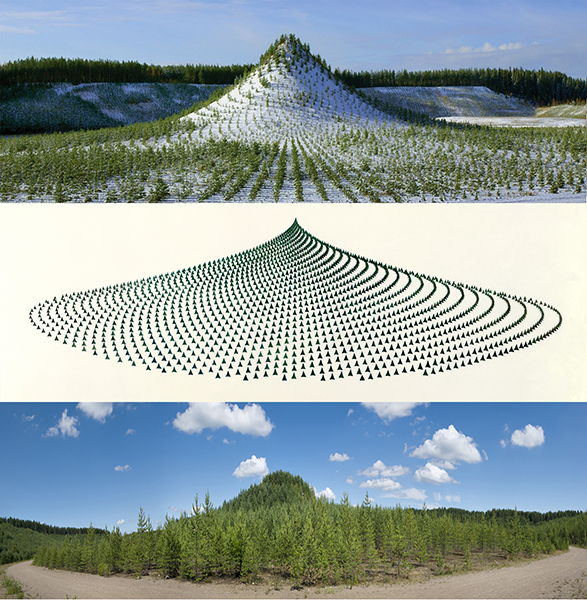
Art in landscapes can highlight ecological issues, hopefully inspiring communities to participate in conservation. Also, these designs often provide a sense of identity and cultural resonance to public spaces, enriching human experiences while fostering a deeper appreciation for nature.
The Tree Mountain project transformed a Finnish gravel pit into a sustainable forest with 11,000 trees planted by 11,000 people in a pattern based on the golden ratio. This 400-year commitment aims to restore environmental balance, blending art and ecology to symbolise global sustainability efforts.
From urban parks with artistic installations to large-scale environmental sculptures, these efforts integrate form and function, revitalising landscapes while promoting a positive link between humans and nature. By combining imagination with ecological awareness, art can transform how we perceive and interact with our environment, emphasising the urgent need to nurture it for future generations.
I feel as landscape architects, we should be able to use our skills to endeavour to follow in Denes’ path.
 AJ Landscape Architecture
Leave a comment