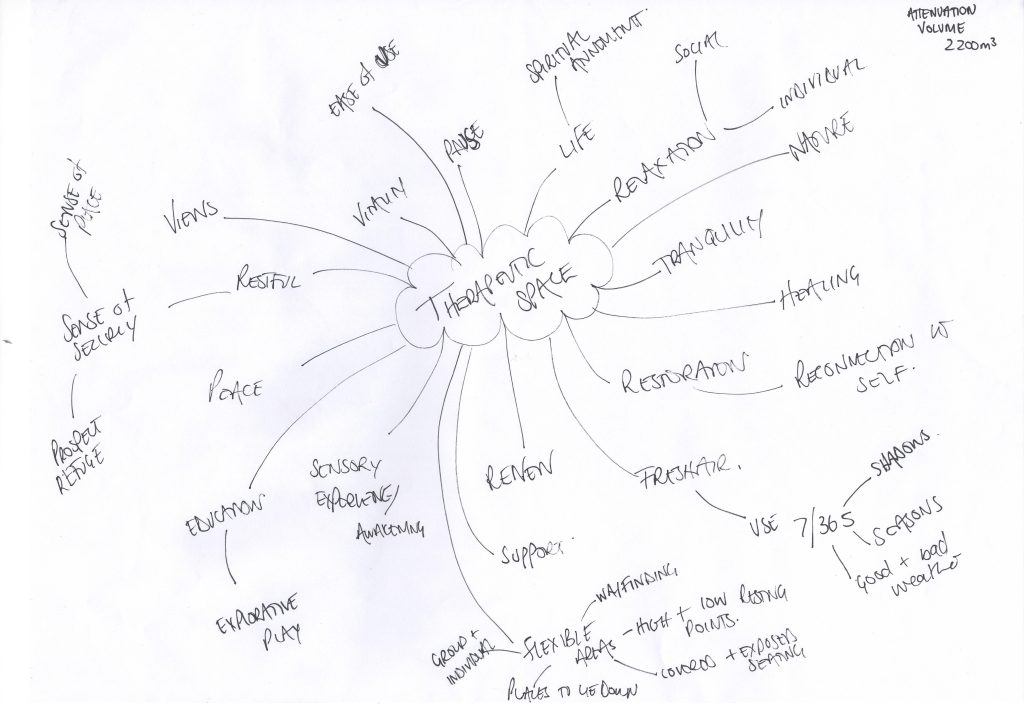
To start generating conceptual ideas for the therapeutic garden, I explored the meaning of “therapeutic” and the elements that contribute to a healing space. I want to explore what makes a space truly healing. A garden should provide comfort, reflection, and renewal; it should be a sanctuary where people can feel at ease and reconnect with themselves.
Symbolism is a key part of this process. Symbols serve as anchors for those in any form of recovery, offering meaning and focus in challenging times. Symbols play a powerful role in recovery, offering people something to hold onto and focus on in times of need. By weaving these elements into the garden’s design, we can create an environment that fosters both physical and emotional healing.
With this in mind, I considered symbols commonly associated with healing, renewal, and hope.

Here are three key symbols I chose to explore further:
- Feathers – Representing lightness, reflection, and transformation.
- Hands – A symbol of connection, support, and human touch.
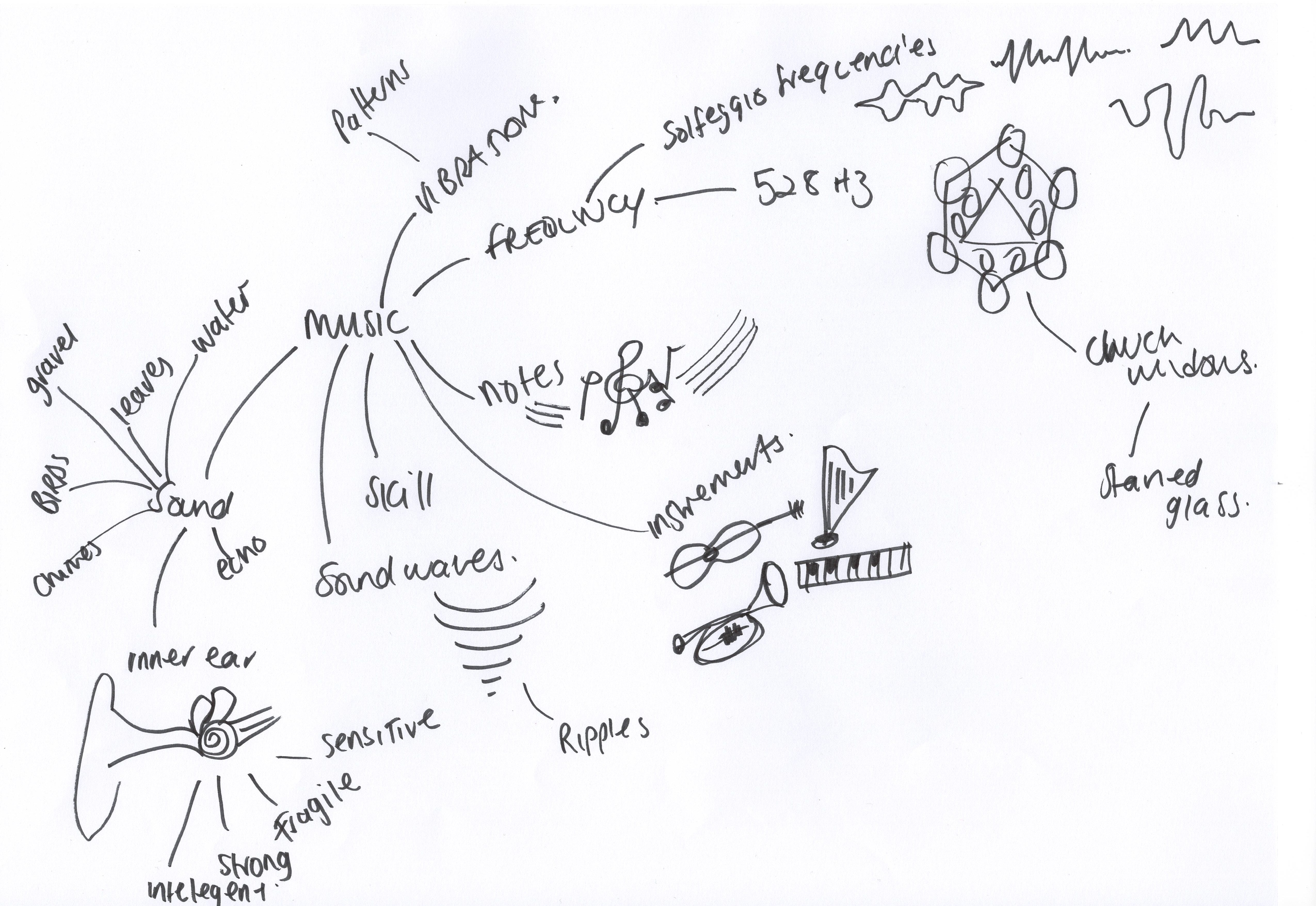
- Music – Evoking healing, emotion, and inner harmony.
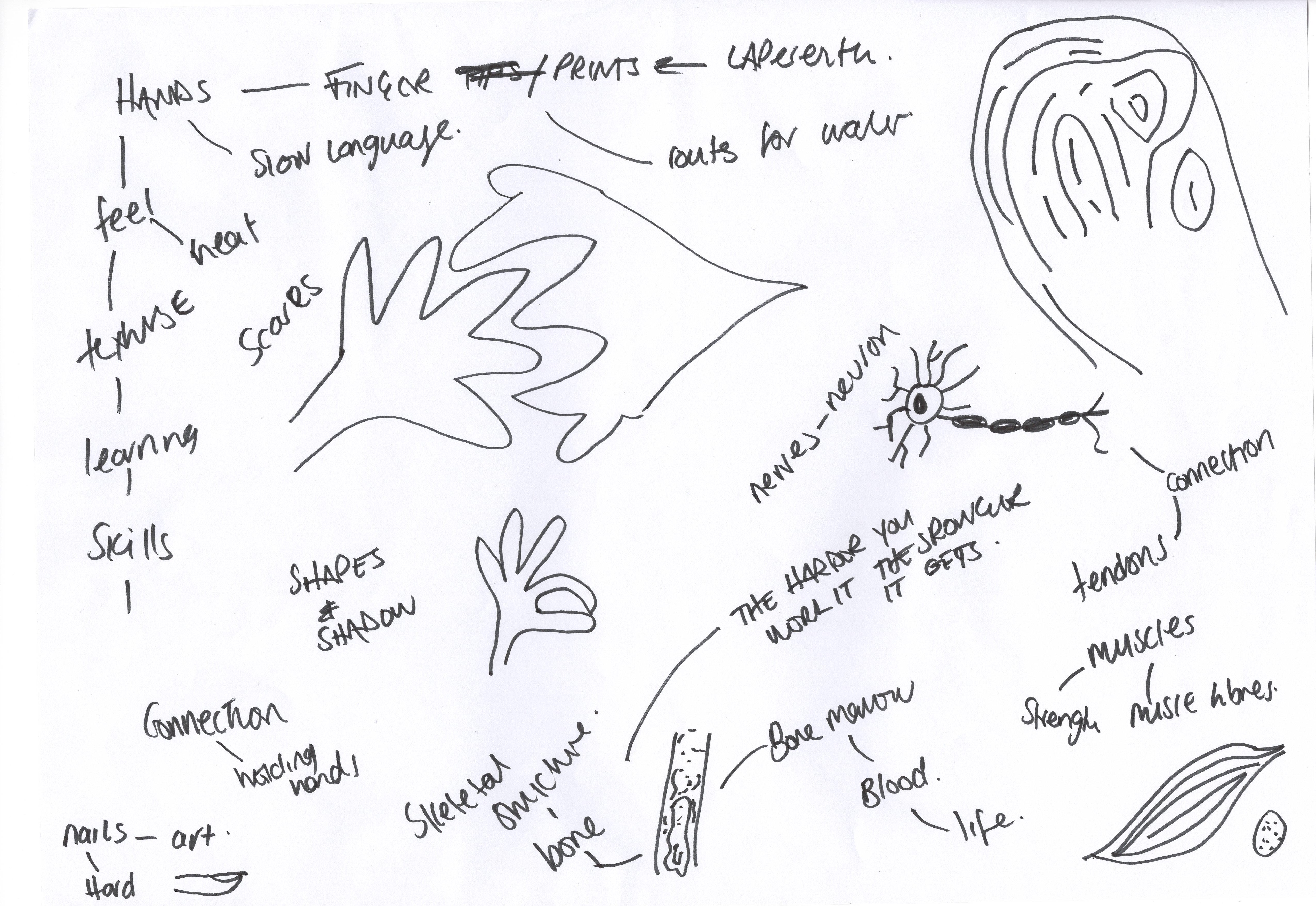
Feathers – Often associated with freedom, transcendence, and lightness, feathers symbolise reflection and renewal. Their delicate nature invites a sense of movement and fragility yet strength and endurance, creating juxtaposition. In the garden, this could be represented through ornamental grasses that sway with the wind or dappled light filtering through overhead canopies, creating a soft, ethereal atmosphere contrasted against sting structural planting or objects.
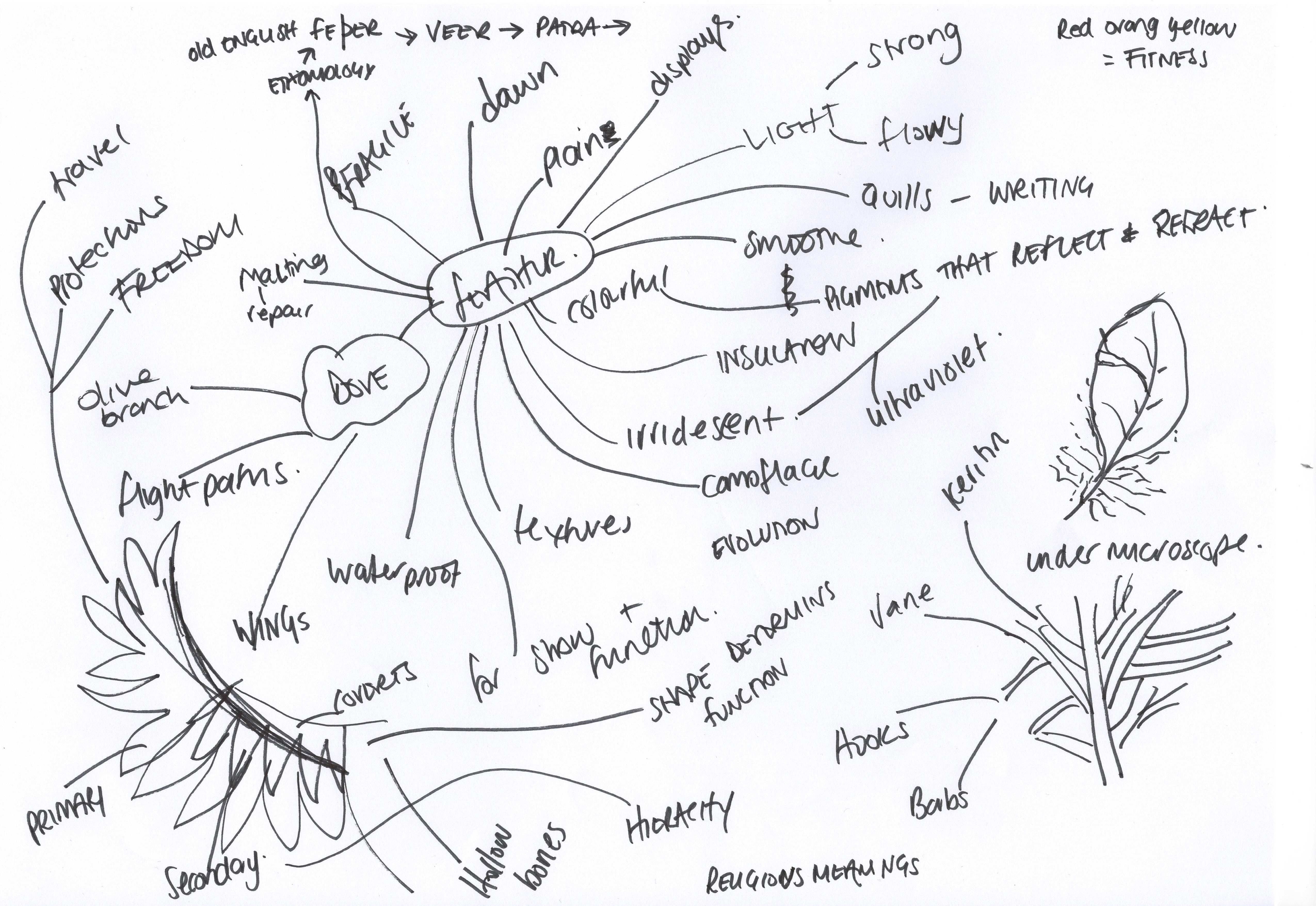
Hands – A universal symbol of connection, support, and care. Hands represent healing through touch, whether in a nurturing embrace or in the act of planting and tending to a garden. This idea could be integrated into the design through interactive elements, textured pathways inviting touch, sculptural hand motifs, or communal spaces encouraging shared experiences. I also looked at the skeletal structure to identify patterns to a nase design.
Music – Sound has a profound impact on well-being, with rhythms and melodies influencing emotions and reducing stress. Music and frequency, as a healing tool, can be represented in the garden through wind chimes, water features that create soothing sounds, or even plants that rustle and whisper in the breeze, adding to the multisensory experience. The frequency patterns could also be replicated in the design.
By incorporating these symbolic elements into the space’s design, it becomes more than just a collection of plants. It hopefully will create a sense of place and security, which seems to be a golden thread in therapeutic spaces, transforming into a haven for reflection, connection and healing.
 AJ Landscape Architecture
Leave a comment