I have been introduced to The Royal Institute of British Architects (RIBA) Plan of Work. This is the go-to framework aid for designing and constructing building projects. It provides a structured approach, guiding architects, engineers, and clients through every phase of a project.
The latest 2020 edition of the RIBA Plan of Work integrates industry feedback, making it more relevant for the user.
Its key components and how it supports the design and construction process are below.
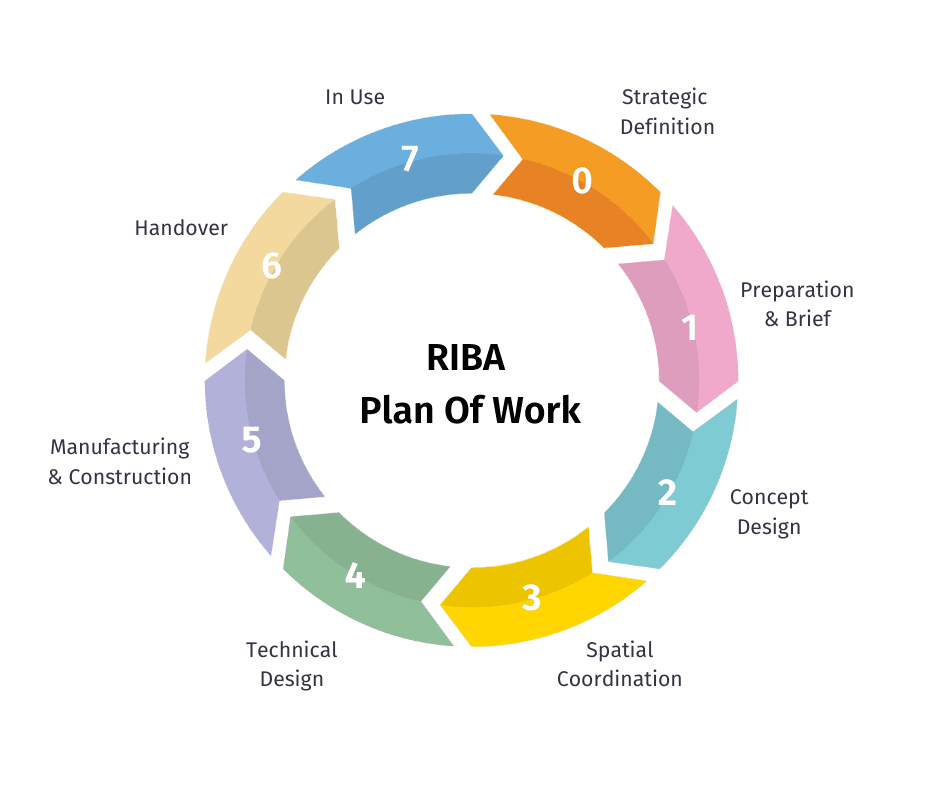
The 8 Stages of the RIBA Plan of Work
The plan is divided into eight distinct stages, each focusing on specific project tasks and milestones:
- 0 – Strategic Definition – Establish the project’s purpose, objectives, and feasibility.
- 1 – Preparation and Briefing – Develop the initial project brief, outline budget expectations, and identify key risks.
- 2 – Concept Design – Explore design ideas and test how they align with the project brief.
- 3 – Spatial Coordination – Refine the design, coordinate spatial arrangements, and ensure feasibility.
- 4 – Technical Design – Develop detailed drawings and specifications for construction.
- 5 – Manufacturing and Construction – Execute off-site manufacturing (if applicable) and begin on-site construction.
- 6 – Handover – Finalize the project, complete necessary inspections, and officially transfer the building to the client.
- 7 – Use – The post-occupancy phase where the building is operated and maintained efficiently.
By following this structured framework, professionals can manage complexity, reduce risks, and deliver successful projects. Therefore, whether an architect, contractor, or client, understanding the RIBA Plan of Work helps set clear expectations and ensures a smoother process from start to finish.
While landscape architecture has its own specialised frameworks, the RIBA Plan of Work offers valuable guidance, structure, and consistency in project delivery. It ensures that landscape architects can reinforce their work alongside architects, planners, and engineers in multidisciplinary projects.
From Further reading, I believe this framework helps landscape architects (LA) organise and manage their projects from initial concept to post-possession. Each stage ensures that key design, planning, and technical aspects are addressed at the right time.
For example:
During Strategic Definition, a LA can assess site potential, environmental constraints, and biodiversity considerations.
In the Concept Design stage, LAs develop masterplans and visualisations to align with architectural and urban planning goals.
The Technical Design stage ensures that materials, drainage, planting strategies, and sustainability measures are detailed and specified correctly.
2. Integration with Architectural and Urban Design Teams
Landscape architecture is often part of a larger built environment project. By following the RIBA Plan of Work, LAs can seamlessly collaborate with architects, engineers, and urban designers, ensuring that the landscape elements are incorporated effectively from the beginning. For example, in Spatial Coordination, Las can work alongside civil engineers to design sustainable drainage systems (SuDS) that integrate well with surrounding infrastructure. Furthermore, the Sustainability Strategy helps LAs ensure that their designs enhance biodiversity by integrating green spaces, native planting, and ecological corridors. Whilst supporting climate resilience through urban greening, flood mitigation, and sustainable drainage. As Well as reduce carbon footprint by selecting low-impact materials and promoting nature-based solutions.
Management and adoption of maintenance is a contentious topic in the industry, as I explored in my dissertation on SuDS, so the Handover and Use stages emphasise how a project functions after construction. This is essential for ensuring the longevity of soft and hard landscape features and planning maintenance schedules for planting, irrigation, adoption, and infrastructure.
This framework and overlays are so important and should improve project planning and coordination with other disciplines whilst ensuring sustainability and environmental goals are rooted from the outset therefore enhancing long-term success across any project.
 AJ Landscape Architecture
Leave a comment