Metaphor
Art historian Henri Focillon suggests, “There is no meaning without displacement of meaning, without metaphor.” In design, metaphors help displace old meanings, generate new patterns of enunciation, and bridge ideas that were previously unrelated. By formulating problems in a new way, metaphors enable designers to approach solutions with greater sensitivity, intensity, and effectiveness. As highlighted by Muller and Knudson in Landscape Metaphors, Ecological Imperatives, and Architectural Design, landscapes possess metaphorical qualities, allowing them to convey meanings beyond their physical characteristics. Landscapes can exhibit traits similar to something entirely different, carrying both power and meaning.

Several landscape architects incorporate metaphor into their work. Charles Jencks is renowned for infusing his projects with symbolism and metaphor, most notably in The Garden of Cosmic Speculation, where scientific concepts are translated into landscape design. Martha Schwartz blends metaphor, art, and landscape architecture to challenge conventional aesthetics and meanings. Similarly, TopoTek 1, led by Martin Rein-Cano, often employs conceptual and metaphorical approaches in urban landscapes.
Symbolism
The concept of symbolic landscapes revolves around how people perceive and assign meaning to their surroundings, including natural features, built structures, and cultural symbols. At the core of symbolic environments lies the power of representation and interpretation. As explored by Robert Heslip, landscapes can embody deep cultural and historical narratives, shaping the way individuals interact with and experience space.
Swiss landscape architect Georges Descombes encapsulates this idea, stating, “Not to see the trees, but the wind that they make visible. The eddies of the water more than the banks. It’s a choice, a risk, a hypothesis, the possibility of an intervention glimpsed in the complexity of a site, then the adjustment of constraints that are closer and closer. It is in the confrontation with the resistance of things, of the world, that we find form.” His approach highlights how landscapes can symbolize movement, transformation, and the intangible forces shaping the environment.
Archetypes
An archetype is a literary and design device in which elements are structured based on universally recognized qualities or traits. In literature, one of the most common archetypes is the Hero, characterized by courage, perseverance, sacrifice, and resilience in overcoming challenges. Similarly, in landscape architecture, archetypal forms and elements create spaces that evoke familiarity, tradition, and deep emotional responses.
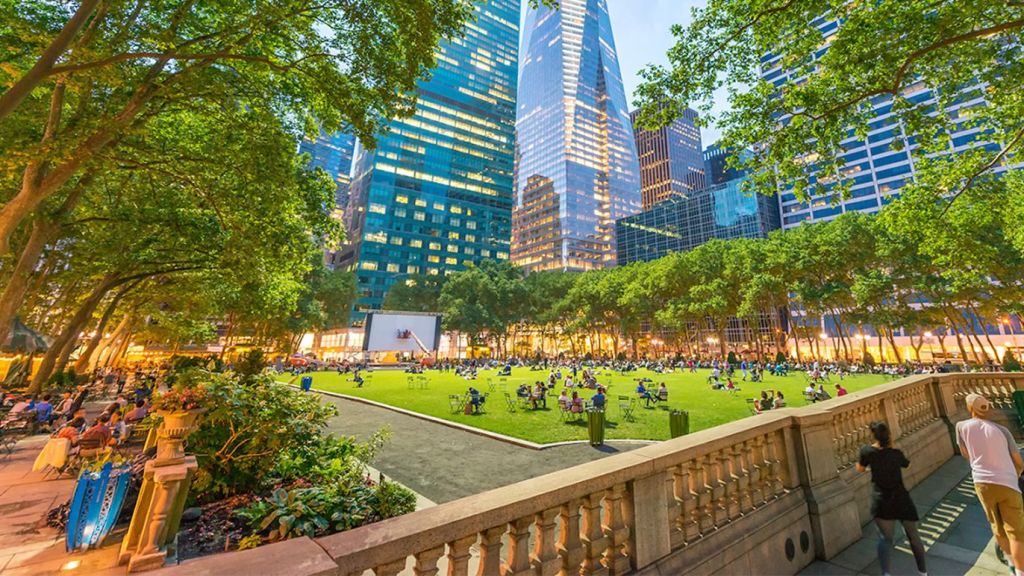
Laurie Olin integrates classical and cultural archetypes into urban landscapes, drawing on historical forms such as groves, plazas, and sacred geometry. His work at Bryant Park (New York) is a modern reinterpretation of traditional European garden archetypes. Luis Barragán, on the other hand, utilizes primordial archetypes like water, walls, and light to elicit strong emotional connections. His projects, such as Casa Gilardi, feature reflective pools, monolithic walls, and sacred spaces reminiscent of ancient structures. Mihály Möcsényi explores Jungian archetypes in landscape architecture, incorporating cultural and mythological themes to create profound and symbolic environments.
Narrative
Narrative-driven landscape design fosters a sense of place and belonging for users while encouraging cultural and historical appreciation. Thoughtfully designed landscapes enhance aesthetic value and promote environmental sustainability by preserving natural features. As explored in Landscape Architecture as Storytelling (CELA), landscapes that incorporate narrative elements can strengthen connections between people, history, and nature.
Allegory
Allegory is a storytelling technique in which a landscape, story, or artwork conveys a hidden meaning, often moral, political, or philosophical in nature. Some landscape architects use allegory to create spaces that symbolize deeper social, cultural, or historical narratives.
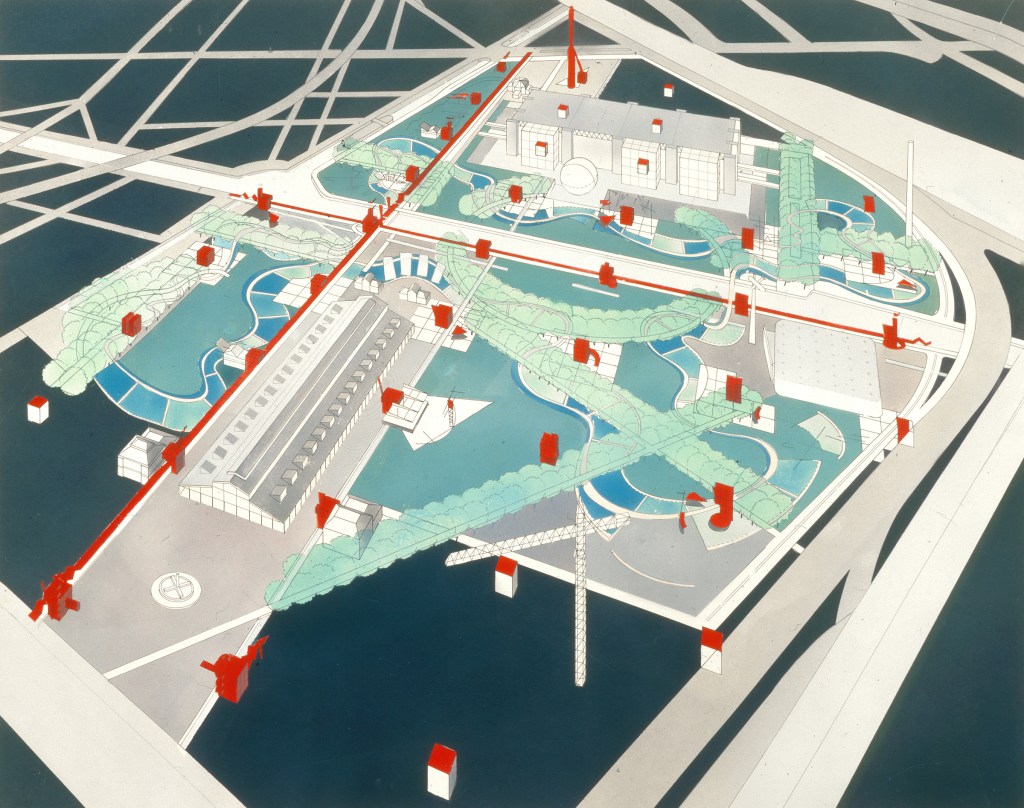
Bernard Tschumi, though primarily an architect, applies allegorical design principles in his landscape work. Parc de la Villette (Paris) serves as an allegory of movement, interaction, and urban life, utilizing a system of points, lines, and surfaces as metaphors for dynamic relationships within the city. Walter Hood also employs allegory in his landscapes, crafting spaces that reflect cultural identity, memory, and justice. His design for The International African American Museum Landscape (Charleston, SC) is an allegory of the Middle Passage, African American heritage, and resilience.
Similarly, landscape architect Geoffrey Jellicoe incorporated allegory into his work, as seen in Runnymede, where the landscape symbolizes democratic ideals and historical continuity.
 AJ Landscape Architecture
Leave a comment