Presented as part of the requirement for an award within the Academic Regulations for Taught Provision at the University of Gloucestershire.
Acknowledgements
Deserving thanks and appreciation go to my Dissertation Supervisor, Bill Burford for his continual encouragement, support and feedback. Further thanks are also extended to David Booth, Vincent Marley and Jamie Liversidge for valued advice throughout the writing of this dissertation.
This dissertation would not have happened without the participation of my interviewees. Their expertise and valued content were a cornerstone of my writing to help answer my research question. Their enthusiasm and involvement are endlessly appreciated.
Finally, to my other half, my love, who has been by my side, protecting me from the storms and picking me up when I fall.

Table of Contents
2.0 List of Figures and Tables. 8
7.1 Topics outside the scope of this dissertation: 20
8.2 Theme 1- Main Barriers to SuDS Implementation. 22
8.2.1 Policy and Legislation. 22
8.3 Theme 2 – Sustainability. 27
8.3.1 1 in 30 and 1 in 100-Year Storm Events. 27
8.4 Theme 3 – Professional Skill Base and Perceptions. 28
8.4.1 Language and Terminology. 28
8.5 Theme 4 – Adopters and Maintenance. 30
8.5.1 Maintenance, adoption and management 30
8.6 Theme 5 – Data Collection and Analysis. 32
8.7 Literature Review Conclusion. 33
9.2 Research Theoretical Framework. 35
9.4 Sampling and Data Collection. 37
9.6 Data Analysis Techniques. 38
9.7 Mitigating ethical issues: 39
10.2 Theme 1: Main Barriers to SuDS Implementation. 42
10.3 Theme 2: Sustainability. 44
10.4 Theme 3: Professional Skill Base and Perceptions. 44
10.4.1 Knowledge/Perspectives. 44
10.5 Theme 4: Adopters and Maintenance. 45
10.6 Theme 5: Data Collection and Analysis. 46
11.2 Legislation, Manual and Guidance. 50
1.0 Abstract
The world’s climate is changing dramatically, with more erratic weather and increasingly intensive storms (Seneviratne et al., 2021). The current infrastructure in the UK does not seem to be holding up to the fast-changing weather patterns (Allard, 2021). This dissertation explores the barriers to integrated and innovative Sustainable Urban Drainage Systems (SuDS). Furthermore, how these flood mitigation systems can be effectively adapted to withstand and mitigate 1 in 100-year storm events whilst minimising adverse effects on neighbouring land, drainage systems, and waterways creating a homogenous, holistic living landscape.
The research will use qualitative research methods by means of ten semi-structured online interviews with industry professionals and a detailed literature review of relevant academic studies, guidance manuals, and policy documents with subsequent qualitative and quantitative research analysis. The interviews explored existing standards, expert opinions, behaviours, and strategies; the literature review examined a deeper understanding of industry perspectives, procedures, and behaviours.
Despite SuDS well-documented benefits (Environment Agency, 2021), their implementation remains hindered by inadequate legislation, failing maintenance protocols and misconceptions about their costs and practical applications (Burnett et al., 2024). The research concluded that developers often opt for simplified SuDS solutions, avoiding the most effective sustainable designs due to presumed cost savings, inadequate statutory legislation and poor industry awareness. Legislation remains a critical area for improvement, as inconsistencies and ambiguities in statutory and non-statutory documents perpetuate existing barriers.
Ultimately, a shift in SuDS perception to reclassify them as critical infrastructure similar to other utilities is vital to ensure that new developments are equipped with effective, integrated, sustainable flood mitigation systems that are resilient to future climatic challenges.
2.0 List of Figures and Tables
Table 1 – GI and SuDS Definitions. 29
Table 2 – Research Methods. 36
Table 4 – Participant Occupation Expertise. 40
Table 5 – Participant Barrier Contribution. 41
Table 6 – Barriers Considered Throughout the Discussion. 50
Table 7 – The Number of Experts Who Contributed to Each Theme. 85
Table 8 – Inclusion and Exclusion Criteria. 86
Table 9 – A List of SuDS Components and Benefits. 99
Table 10 – Cambridge Design and Adoption Guide Table. 103
Table 11 – Flood Risk Management Funding Responsibility. 104
Table 12 – Example Table of Maintenance Recommendations. 105
Table 13 – Theme That Answered the Research Objectives. 106
Table 14 – Adoption Restriction. 107
3.0 List of Figures
Figure 1 – The Funding Responsibility Flow Chart 24
Figure 3 – SuDS Maintenance Standards. 31
Figure 4 – Number of Experts Identifying a Specific Barrier. 41
Figure 5 – Sample of Populated Excel Spreadsheet 84
Figure 6 – Sample of all fields within the Excel Literature Review Matrix. 84
Figure 7 – Four Pillars of SuDS. 98
Figure 8 – Example of Boolean Research Method. 101
Figure 9 – Cambridge Design and Adoption Guide Flow Chart 102
4.0 Appendices Contents
Appendix A – Email of Request 76
Appendix B – One-to-One Interview Questions. 78
Appendix C – Follow-Up Email with Questions. 80
Appendix D – SuDS and GI Definition Matrix. 81
Appendix E- Literature Review Coding Matrix. 84
Appendix F – The Number of Experts Who Contributed to Each Theme. 85
Appendix G – Inclusion and Exclusion Criteria. 86
Appendix H – Coded Interview Finding Summary. 87
Appendix I – Four Pillars of Suds. 98
Appendix J – A List of SuDS Components and Benefits. 99
Appendix K – List of Professionals. 100
Appendix L – An Example Boolean Research. 101
Appendix M – Cambridge Design and Adoption Guide Flow Chart Table. 102
Appendix N – Flood Risk Management Funding Responsibility Table. 104
Appendix O – Example Table of Maintenance Recommendations. 105
Appendix P – Themes That Answered the Research Objective. 106
Appendix Q – Adoption Restriction Table. 107
5.0 List of Abbreviations
| 1/1. | 1 in 1-year Storms |
| 1/100 | 1 in 100-year Storms |
| 1/30. | 1 in 30-year Storms |
| BNG | Biodiversity Net Gain |
| CIRIA | Construction Industry Research and Information Association |
| DEFRA | Department for Environment, Food and Rural Affairs |
| EA | Environment Agency |
| FWMA | Flood Water Management Act 2010 |
| GBI | Green and Blue Infrastructure aka Green-Blue or Blue-Green Infrastructure |
| GI | Green Infrastructure |
| LA | Local Authority |
| LGA | Local Government Association |
| LPA | Local planning authorities |
| NHBC | National House Building Council |
| NPPF | National Planning Policy Framework |
| OFWAT | Water Services Regulation Authority |
| ONS | Office of National Statistics |
| Pn | Denote the participant anonymity code of an interviewee. |
| ROI | Return on Investment |
| S3 | Schedule 3 |
| SAB | SuDS Approving Body |
| SDEM | Sustainable Drainage Explanatory Memorandum |
| SuDS | Sustainable Drainage Systems |
| WSUD | Water Sensitive Urban Design |
6.0 Glossary
| 1 in 1 year rainfall/storm event | An event that has a probability of occurring, on average, once a year. The depth of rainfall for the event will depend on the duration of the event being considered (LASOO, 2016). |
| 1 in 100-year rainfall/storm event | An event that has a probability of occurring, on average, of 1% in any one year. The depth of rainfall for the event will depend on the duration of the event being considered (LASOO, 2016). |
| 1 in 30-year rainfall event | An event that has a probability of occurring, on average, of 3.3% in any one year. The depth of rainfall for the event will depend on the duration of the event being considered (LASOO, 2016). |
| Adopter(s) | Local Authorities or an organisation that will take responsibility for the SuDS after the developers’ period has ended (LASOO, 2016). |
| Amenity value | Characteristics that are deemed to be a benefit of a piece of property (Savills, 2024). |
| Attenuation Ponds | also referred to as rainwater attenuation basins, are engineered structures designed to manage and control excess rainwater and help prevent flooding. These ponds act as temporary reservoirs, strategically placed to collect and detain rainwater runoff, slowly releasing the water by infiltration or into waterways (Knight, 2024) |
| Blue space | Areas dominated by surface waterbodies or watercourses (White et al., 2020). |
| Capital Funding | Money that is spent on investment and resources that will create growth in the future. It typically involves building or major refurbishment of flood defence assets (Burnett et al., 2024). |
| Commuted Sums | A one-off payment of a capital sum made as a contribution towards the future maintenance of an asset to be adopted. Commuted sums generally relate to payments made by developers through bespoke legal agreements (White et al., 2020). |
| Component | Is a drainage feature that can take many different forms, e.g. Swale, Green Roof (LASOO, 2016) |
| Critical infrastructure | Systems, facilities and assets that are vital for the functioning of society and the economy (IBM, 2024). |
| Cumulative Sum | A cumulative sum is a sequence of partial sums of a given sequence, where each term is the sum of all preceding terms (Wolfram Research, Inc., no date). |
| Curtilage | The area of land around a building or group of buildings which is for the private use of the occupants of the buildings (LASOO, 2016). |
| Design life of the development | Dependent on the nature of the site and development. Typically, 60 years for commercial development (LASOO, 2016). |
| Discharge Compliance Limits | The limit to permit a water flow rate of a site (Environment Agency, 2019). |
| Drainage strategy | A document containing the full design, construction, operation and maintenance details of a drainage system to manage surface water. This document will form part of the drainage application which is submitted to the local planning authority for determination (LASOO, 2016). |
| Drainage system | All the components that convey the water to a point of discharge (LASOO, 2016). |
| End-of-line SUDS | SuDS components are generally used at the end of a SuDS management train such as basins and swales (McLeod and Mickovski., 2024). |
| Evapotranspiration | The sum of all processes by which water moves from the land surface to the atmosphere via evaporation and transpiration (USGS, 2019) . |
| Exceedance | An event that exceeds the capabilities of the surface water drainage system could be excessive rainfall, or blockage or a combination of tidal and pluvial events Non-Statutory Technical Standards for Sustainable Drainage: Practice Guidance 27 (White et al., 2020). |
| Exceedance flow | Is the overflow of water from a drainage system that occurs when the rainfall is greater than the capacity of the system (White et al., 2020). |
| Experts | An umbrella term used for the purpose of this dissertation only, including all participants taking part in the dissertation interviews. These professions included Developers, Landscape Architects, Drainage Engineers, Government Advisor, Project Managers, and SuDs Component Specialist. |
| Four pillars of SuDS | Refer to appendix H |
| Gentrification | Gentrification is the process of changing the character of a neighbourhood through the influx of more affluent residents and businesses (Finio, 2021). |
| Green Infrastructure | A strategically planned network of natural and semi-natural areas with other environmental features, designed and managed to deliver a wide range of ecosystem services, while also enhancing biodiversity (European Commission, 2024). |
| Green space | Greenspace refers to urban parks and wetlands, including public parks, street verges, cemeteries, and sports grounds that comprise some vegetation (Taylor and Hochuli, 2017). |
| Greenfield runoff rate | The rate/speed per hour/min of runoff that would occur from the site in its undeveloped and, therefore, undisturbed state (LASOO, 2016). |
| Greenfield runoff volume | The volume/amount of runoff that would occur from the site in its undeveloped and, therefore, undisturbed state (LASOO, 2016). |
| Hard Landscape | Non-living elements in landscape design/architecture, including paving, structures, and roads (Blake, 2015). |
| Impermeable area | All paved or roof areas that are not specifically designed to be permeable (LASOO, 2016). |
| Industry | To include that of Construction, Design and Planning. This list is not exhaustive. |
| Infiltration | Is where water is allowed to soak into the ground (LASOO, 2016). |
| Integrated system/management | Is to link drainage components within areas, including landscape, adoptive areas and curtilage, providing a basic framework for balancing competing demands within a given area (Reed, Deakin, and Sunderland, 2015). |
| Interception | Is preventing runoff from leaving a site for the majority of small rainfall events (LASOO, 2016). |
| Maintenance | Means the on-going maintenance of all elements of the sustainable drainage system (including mechanical components) and will include elements such as; on-going inspections relating to performance and asset condition assessments, operation costs, regular maintenance, remedial works and irregular maintenance (LASOO, 2016). |
| Non-potable water | It is stored water that is not suitable for human consumption; however, it has a wide variety of uses that are essential in our everyday lives, including plumbing, gardening, washing machine water, toilet and urinal flushing (Wooldridge, 2024). |
| Peak rate of runoff | Is the highest rate of flow from a defined catchment area assuming that rainfall is uniformly distributed over the drainage area, considering the entire drainage area as a single unit and estimation of flow at the most downstream destination(s) only (LASOO, 2016). |
| Pn | Denote the participant anonymity code of an interviewee. |
| Previously developed land | Also referred to as brownfield development that is no longer in use (LASOO, 2016) |
| Professionals | An umbrella term used for the purpose of this dissertation only, including professions working within this industry, including Developers, Landscape Architects, Drainage Engineers, and Planners. |
| Resource Funding | Money that is spent on day-to-day resources and administration costs. Amongst other things, it covers spending on routine maintenance of defences. It can( also be referred to as revenue spending (Burnett et al., 2024). |
| SAB | SuDS Approval Body has statutory responsibility for approving and, in some cases, adopting and maintaining the approved drainage systems (Monmouthshire County Council, 2022) . |
| Single property drainage system | This is the constituent parts of a drainage system within the curtilage of a single property and that only receive flows from that property (LASOO, 2016). |
| Soft Landscape | Living elements in landscape design/architecture, including green and blue infrastructure, grass, verges, and plants (Blake, 2015). |
| Sponge capacity | The ability and capacity of a component or soil to hold/store water (Luo, Pan and Liu, 2020). |
| Structural integrity | Ensures that a system fulfils its design function (LASOO, 2016). |
| SuDS/SUDS | Suburban drainage systems and sustainable drainage systems – used interchangeably. SuDS give equal consideration to controlling water quantity, improving water quality, providing opportunities for amenity and improving biodiversity. Similar to a natural catchment, a combination of drainage features (also known as components) work together in sequence to form a management train (Woods Ballard et al., 2015). |
| Susdrain | Community that provides a range of resources for those involved in delivering sustainable drainage systems (Susdrain, no date). |
| Sustainable drainage | Aims to imitate the natural drainage of a site before any development (Woods Ballard et al., 2015). |
| Swale | It is a SuDS component that is similar to a wide, shallow ditch but with a flat bottom (Woods Ballard et al., 2015). |
| The Management Train | Is a sequence of components that are connected together to drain surface water from a site. Controls both flows and volumes, as well as treating surface runoff to improve water quality. The fundamental principle is to slow down the movement of surface water runoff or encourage it to infiltrate into the ground to reduce its impact further down the catchment (Woods Ballard et al., 2015). |
| Urban Creep | This is the conversion of permeable surfaces to impermeable over time e.g. impermeable surfacing of front gardens to provide additional parking spaces, extensions to existing buildings, creation of large patio areas. The consideration of urban creep (is best) assessed on a site-by-site basis but is limited to residential development only. It is important that the appropriate allowance for urban creep is included in the design of the drainage system over the lifetime of the proposed development (Mcdonnell and Motta, 2021). |
7.0 Introduction
The construction of new developments in the UK requires the installation of sustainable drainage systems (SuDS) to reduce and mitigate the potential consequences of the increased surface water on the site (Woods Ballard et al., 2015). This research investigates the barriers affecting the efficacy of SuDS schemes and their creative innovation within green infrastructure (GI) which may be limiting their potential for effective water attenuation during storm events. With the engineering capabilities available, it should be feasible to design green and blue infrastructure (GBI) that safely manages water on-site during a 1-in-100-year storm event (1/100) without posing risks to buildings or infrastructure.
This dissertation explores the challenges to deeper integration of SuDS and green infrastructure (GI) in design and implementation. The research examines the viability of mitigating a 1/100 storm event using cohesive SuDS-GI strategies while safeguarding buildings, hardscapes, and infrastructure. The research also aims to identify ways to address these challenges in future residential developments.
The research will investigate how new developments prioritise the design and building of SuDS regarding aesthetic, environmental and commercial viability. Furthermore, the research highlights opportunities for developers to improve Biodiversity Net Gain (BNG) scores and for landscape architects and engineers to create bespoke, ecologically rich spaces, making developments more attractive for all stakeholders.
For the purpose of this dissertation:
- ‘SuDS’ refers to all the SuDS components either individually or as an integrated system, unless stated otherwise. A complete list of SuDS components, including their benefits, can be found in Table 9 within Appendix J.
- ‘Professionals’ will mean all skilled professionals working within the construction industry unless stated otherwise; while ‘experts’ refers to those interviewed for this research. A list of the professionals can be found in Appendix K.
- SuDS excludes sewage/black water and foul sewerage systems due to discharge restrictions (DEFRA, 2011)
7.1 Topics outside the scope of this dissertation:
- Consultation with the Environment Agency
- Biodiversity and wildlife
- Link between mental health and green spaces
- Pollution
- Constructed wetlands
- Consultation with the public
8.0 Literature Review
8.1 Introduction
This literature review aims to identify relevant academic studies, guidance manuals, and policy documents to understand the barriers to SuDS implementation in the UK. It will explore whether SuDS can be improved to better leverage professional expertise and optimise land use within development sites.
‘To those who understand the green infrastructure concept, and its promise, the need and opportunity to apply it in the pursuit of sustainability are quite profound.’
(Ahern, 2007 cited in Wright, 2011)
The reviewed literature includes scholarly papers and ‘grey’ literature, legislative and policy documents produced for disciplines including planning, landscape architecture, and construction. An example of the researchers’ Boolean Research technique is shown in Fig. 8 in Appendix L. Recommendations will focus on improving current processes and addressing gaps in research and resources. The review is organised under the following thematic headings:
- Theme 1 – Main Barriers to SuDS Implementation
- Theme 2 – Sustainability
- Theme 3 – Professional Skill Base and Perceptions
- Theme 4 – Adopters and Maintenance
- Theme 5 – Data Collection and Analysis
The literature identifies ambiguities in legislation and the design-to-build process, as well as perceived loopholes and weak enforcement of standards. These issues allow developers to meet planning requirements while potentially prioritising cost-saving solutions over optimal water management practices on and off-site. Furthermore, this review will explore the multiple definitions of Green Infrastructure (GI) and Sustainable Urban Drainage (SuDS) throughout the literature within the inclusion criteria. The full inclusion and exclusion criteria can be found in Table 8 Appendix G.
Moreover, this research will examine the feasibility of mitigating 1/100 through effective GBI design, ensuring no risk to buildings or infrastructure.
8.2 Theme 1- Main Barriers to SuDS Implementation
8.2.1 Policy and Legislation
8.2.1.1 Non-Statutory
The 2012 National Planning Policy Framework (NPPF) encourages prioritising developments with SuDs and highlights the importance of maintaining SuDS over their lifespan (UK Government, 2012). This framework promotes designing SuDS as central elements from the early stages of development.
Furthermore, the NPPF also recommends that ‘Local government policies should support appropriate measures to ensure the future resilience of communities and infrastructure to climate change impacts’ (UK Government, 2012). However, this document is non-statutory and uses non-obligatory language such as ‘should’ and ‘consider’.
In 2015, DEFRA issued a technical standards document for SuDS, offering concise design, maintenance, and operation standards to supplement the NPPF (DEFRA, 2015). Despite this, its non-mandatory status could reduce policy enforcement, affecting adherence to standards (Khanna, 2001).
The CIRIA SuDS Manual, developed with broad interprofessional stakeholder input, is widely regarded as a reliable guide for SuDS design and management (Woods Ballard et al., 2015). Its 2017 update introduced new content, requiring professionals to reference both manuals for complete guidance (Illman and Drake, 2017). However, the manuals are costly, creating a potential accessibility barrier for some professionals (White, 2005).
Furthermore, LASOO (2016) states the Non-Statutory Technical Standards for Sustainable Drainage: Practice Guidance, supports the technical standards used in conjunction with the NPPF and CIRIA SuDS Manual. Due to these documents age and poor ease of access, they may be overlooked.
The Cambridge SuDS Manual was developed specifically for the needs of the Cambridge Council. This document also helps resolve jurisdictional ambiguities when developments span multiple council boundaries. While less detailed than the CIRIA SuDS Manual, it offers concise information on costs, maintenance, and constraints, facilitating informed decision-making (Wilson et al., 2009). All the SuDS manuals aim to abide by the SuDS Principles represented in Fig 7 within Appendix I.
Other local councils have adapted the Cambridge Design and Adoption Guide rather than devising their own (Wilson et al., 2009). This comprehensive document defines SuDS, detailing their components and functions, making it both an informative resource and a practical design guide. This document references the CIRIA manual and follows its guidelines. Furthermore, emphasising that integrating the SuDS design into the development master plan at an early stage is paramount to a successful design, and this also requires early and effective consultation with all parties that are involved in the approval process (Wilson et al., 2009).
The Adoption Guides (Fig 9; Table 10) from the Cambridge Design and Adoption Guide can be found in Appendix M.
The Flood Risk Management and Funding document identifies that the responsibility of flooding was spread across many departments.
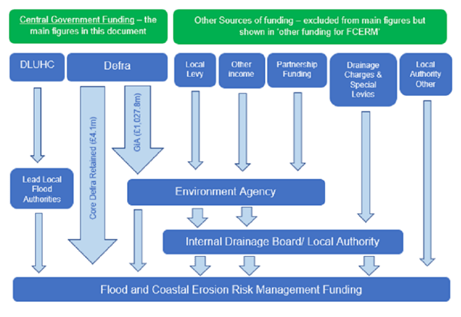
Figure 1 – The Funding Responsibility Flow Chart
Table 11, found in Appendix N, expands on the Funding Responsibility within the UK.
The complex structure of responsibility could identify possible ambiguity and confusion if professionals are unaware of this information (Burnett et al., 2024).
8.2.1.2 Statutory
The Flood and Water Management Act 2010 (FWMA) provides the statutory framework for flood management in England (DEFRA, 2017; UK Government, 2010). This act was deemed inadequate for addressing the UK’s flooding challenges (DEFRA, 2017). In contrast, the Welsh Government’s Schedule 3 establishes statutory regulations for surface water systems in new developments, using enforceable language such as ‘must’ and ‘require’. (Welsh Government, 2019). However, Schedule 3 and its accompanying guidance do not include any design or construction support. For this, the authors have forwarded readers to the non-statutory CIRIA manuals.
Similarly, the Scottish Government introduced a statutory policy framework in 2021 to create ‘Water-Resilient Places’, addressing fragmented decision-making processes (Scottish Government, 2021). However, the lack of explicit definitions for terms like ‘surface water’ and ‘water-resilient places’ and the use of unfamiliar terminology may create additional hurdles for professionals (Wright, 2011). The intention was to overcome issues created by the multiple influences in the decision-making process and the range of legislation and policies in place in Scotland (McLeod and Mickovski, 2024).
8.2.2 Cost
Cost remains one of the primary barriers to the widespread installation of SuDS, as identified in the literature. However, cost breakdowns in existing studies are often vague, leading to gaps in understanding and potential biases in decision-making. Many barriers to SuDS are perceived rather than substantiated, relying on assumptions or incomplete data (Cotterill and Bracken, 2020). This stresses the need for clear, evidence-based cost-benefit analyses to enable professionals to make informed decisions.
The Lasoo Non-Statutory Guidance emphasises that integrating SuDS into landscape design from the earliest stages of planning is more cost-effective, as it reduces time and costs associated with potential functional failures (LASOO, 2016). While the guidance outlines a systematic design sequence for achieving cost-effectiveness throughout a project’s lifecycle, it does not define cost parameters in detail, leaving room for misinterpretation (LASOO, 2016).
Similarly, Schedule 3 of the FWMA and its accompanying Sustainable Drainage Explanatory Memorandum (SDEM) focus primarily on design and installation costs, highlighting potential savings by avoiding the need to build or connect to traditional infrastructure (Welsh Government, 2018). However, the SDEM discusses maintenance costs only for the first year, which may be disproportionately represented, as maintenance is required over the system’s lifetime (Welsh Government, 2018).
McLeod and Mickovski (2024) highlight that the cost of building and maintaining a SuDS is a barrier for developers, suggesting that developers are looking to reduce construction costs with little concern for the long-term maintenance costs to the subsequent adopter. Conversely, adopters are primarily focused on the long-term performance of the system, with little concern for the initial investment made by developers.
Despite these challenges, there is evidence that SuDS implementation can deliver economic benefits. Data from the Office of National Statistics (ONS) indicates that urban homes near parks, gardens, playing fields, and other publicly accessible green spaces command higher property values. For example, house prices can be up to £4,813 higher in proximity to green and blue spaces (Anderson and Vahe, 2018; Lorenzi, 2019). Fig 2 identifies the percentage increase in property value when dwellings depending on how close they are located.
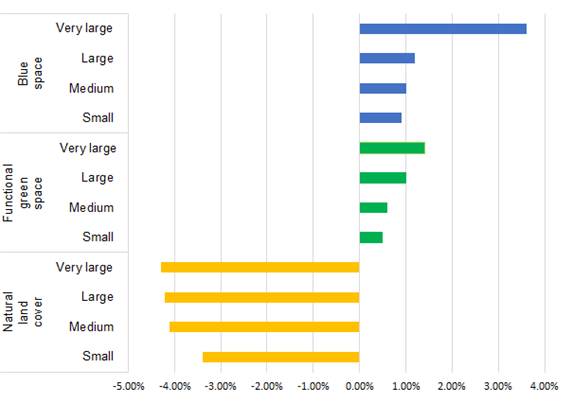
Figure 2 – Percentage House Price Increase in relation to the distance from Blue and Green Spaces
(Anderson and Vahe, 2018)
Government funding also plays a critical role in SuDS adoption. In the Autumn Budget of 2024, the Labour Government allocated £2.4 billion for flood defences over 2024-2026 (Treasury, 2024). However, it acknowledged ‘significant funding pressures’, indicating that plans might require reassessment from 2025-26 (Treasury, 2024). Despite these constraints, the investment has the potential to reduce flood risk by 5-11% by 2027, saving the economy an estimated £2.7 billion (Burnett et al., 2024). This highlights the availability of public funds that could be leveraged to support SuDS integration in new developments, aligning with long-term economic and environmental goals.
8.3 Theme 2 – Sustainability
8.3.1 1 in 30 and 1 in 100-Year Storm Events
The Environment Agency (EA) outlines three annual probabilities used to define discharge compliance limits for weather events of varying frequencies:
- 100% (1 year),
- 3.33% (30 year) and
- 1% (100 year)
(Kellager, 2013)
DEFRA’s Preliminary Rainfall Runoff Management Document recommends that runoff up to the 1% annual probability event (1/100) should ideally be managed onsite using designated temporary storage areas unless it can be demonstrated that offsite discharge would not result in nuisance, damage, or increased river flows during flooding (Kellager, 2013). However, the use of the term ‘preferably’ creates ambiguity, as it implies this standard is not compulsory. Such language allows for flexibility in interpretation, which may undermine consistent implementation.
The National Standards for Sustainable Drainage Systems explicitly state that discharge flow rates from development sites must not exceed pre-development levels during both 1 in 1-year (1/1) and 1 in 100-year (1/100) storm events (DEFRA, 2011). Additionally, drainage systems should be designed to prevent flooding:
- On any part of the site for a 1 in 30-year rainfall event; and
- During a 1 in 100-year rainfall event in any part of: a building (including a basement); or utility plant susceptible to water (e.g. pumping station or electricity substation); or
- On neighbouring sites during a 1 in 100-year rainfall event.
(DEFRA, 2011)
These standards suggest that designers can adapt GI and SuDS techniques to withstand 1/100 storm events, particularly in areas designated for flood management, ensuring hard infrastructure remains unaffected.
8.4 Theme 3 – Professional Skill Base and Perceptions
8.4.1 Language and Terminology
Confusion arises from the varying and often inconsistent definitions of GI and SuDS across policies and literature (Wright, 2011). The literature highlights that although these terms are sometimes used interchangeably, they are distinct. GI refers broadly to networks of natural and semi-natural features that provide environmental, social, and economic benefits, whereas SuDS specifically relate to managing surface water sustainably.
The table below is an excerpt from the full Table 1 – GI and SuDS Definitions found in Appendix D.
Table 1 – GI and SuDS Definitions
| GI | European Commission, 2024 | ‘A strategically planned network of natural and semi-natural areas with other environmental features, designed and managed to deliver a wide range of ecosystem services, while also enhancing biodiversity.’ | Purpose/Function/ Components |
| SUDS | CIRIA Suds Manual, 2015 | Sustainable drainage systems (SuDS) give equal consideration to controlling water quantity, improving water quality, providing opportunities for amenity and improving biodiversity. Similar to a natural catchment, a combination of drainage features (also known as components) work together in sequence to form a management train. | Purpose/Function/ Components |
For example, the NPPF uses the term ‘green space’ without providing a clear definition, leading to ambiguity. In contrast, the European Commission’s definition of GI is explicit, detailing its purpose, function, and components with minimal ambiguity (European Commission, 2024). This variability in definitions reflects the need for flexibility to account for differing topographies, scales, and flood risks but can also confuse professionals who require clarity in purpose, function, and mechanism (Wright, 2011).
Subjective terms such as ‘contribute’ and ‘enhancement’ in definitions further complicate understanding (Benedict and McMahon, 2006; LGA, no date). Ambiguity in statutory definitions, such as that within Schedule 3, leaves room for contention, as it broadly describes SuDS functions post-installation but does not specify required system components. This lack of detail can hinder enforcement and the establishment of professional standards.
By contrast, the CIRIA SuDS Manual offers a concise, clear definition, explaining the concept, process, function, and components of SuDS. This approach minimises contention and ambiguity, providing a reliable reference for professionals. Furthermore, Pamukcu-Albers et al., (2021) highlighted that increasing awareness, knowledge and skill base will improve the planning, design, installation and maintenance of SuDS.
8.5 Theme 4 – Adopters and Maintenance
8.5.1 Maintenance, adoption and management
The maintenance, adoption, and management of SuDS post-construction are highly debated topics within the literature. Statutory and non-statutory guidance, including the CIRIA SuDS Manual, emphasises the necessity of comprehensive maintenance plans (Woods Ballard et al., 2015). The NPPF also mandates that SuDS must include maintenance arrangements to ensure their functionality throughout the development’s lifetime (UK Government, 2012). Similarly, the CIRIA guidance stresses that the purpose of a maintenance plan is to ensure all those involved in the maintenance and ongoing operation of the SuDS system understand its functionality and maintenance requirements in terms of supporting long-term performance to the design criteria to which it was designed (CIRIA, 2021). These guidelines collectively highlight the critical role of maintenance in ensuring the lifelong health and performance of SuDS.
DEFRA’s national standards for SuDS identify that an approved drainage plan must include the safe operation and maintenance of SuDS (DEFRA, 2011). However, this document does not state for how long a maintenance plan should be in place, which could be misconstrued as ambiguous.
Research reveals that 70-75% of Local planning authorities (LPAs) have no monitoring or reporting of SuDS (Welsh Government, 2018). Many LPAs report constraints in time, expertise, and resources, which hinder their ability to ensure that maintenance arrangements are implemented and adhered to for the lifetime of the development (Welsh Government, 2018).
The CIRIA SuDS Manual provides detailed operational and maintenance requirements for each SuDS component (Woods Ballard et al., 2015). An example of one of these maintenance requirements is in Table 12 of within Appendix O.
This is echoed within the Anglian Water SuDS Manual (Anglian Water, 2023). Furthermore, Susdrain emphasises the importance of maintenance through their literature and online resources (CIRIA, 2021).
A table of recommendations by Charlesworth and Booth (2016) below in Fig. 3 informs on SuDS maintenance Standards.
Low Visibility Sites
Low: Basic maintenance to ensure function
Low frequency visits
Main litter removal and maintenance of vegetation
Additional activities may be identified to improve operations
High visibility sites
Medium: For function and aesthetic appeal
More frequent visits
Urban area, public community spaces and densely populated areas
High: Enhanced maintenance
Additional focus on planting specification and aesthetic appeal
Figure 3 – SuDS Maintenance Standards
(Charlesworth and Booth, 2017, p.51)
Due to the adoption restrictions detailed in Table 14, Appendix Q. The Cambridge City Council SuDS Manual stipulates that SuDS located within curtilage or private land will not be adopted by Local Authorities, leaving maintenance responsibilities to the property owner (Wilson et al., 2009). A study by McLeod and Mickovski (2024) found that 83.3% of homeowners were unaware of the maintenance requirements for SuDS features within their property boundaries. This lack of knowledge and the failure of the developers to pass on relevant SuDS information and instructional material to the vendors. Furthermore, this lack of information further contributes to a negative attitude towards SuDS and the discrepancies among professionals regarding flood protection and water quality enhancement (McLeod and Mickovski, 2024).
8.6 Theme 5 – Data Collection and Analysis
8.6.1 Data
There is insufficient research to determine the software that could best utilise SuDS to aid professionals when designing and implementing SuDS.
8.6.2 Urban Creep
A study by Mcdonnell and Motta (2021) suggested that before 2003 urban creep was calculated at an average of 7.55% across the lifetime of a property. This increase in impervious materials was shown to directly correlate with an equivalent rise in runoff volume; for instance, a 10% increase in impervious material resulted in a 9.9% increase in applied precipitation runoff (Mcdonnell and Motta, 2021). Suburban areas accounted for 67% of the total increase in impervious surface, identifying that higher-density areas are more likely to have urban creep than other areas (Mcdonnell and Motta, 2021). These findings highlight a lack of public awareness regarding the importance of maintaining SuDS components within property boundaries. However, more recent urban creep statistics remain unavailable, creating a knowledge gap in understanding of its current impact (Tewkesbury, 2019).
8.7 Literature Review Conclusion
The literature highlights several persistent barriers to SuDS implementation, including costs, knowledge gaps, limited understanding, maintenance challenges, adoption issues, insufficient funding, and the overwhelming number of statutory and non-statutory reference documents. Despite ongoing efforts to address these issues through new and updated guidance, significant obstacles remain (White, 2005; Schlüter and Jefferies, 2005). Inconsistent definitions and terminology exacerbate confusion, creating potential ambiguity and contention throughout the construction and maintenance phases. The lack of standardisation and non-statutory nature of most of the documents have compounded these barriers. The literature identifies that the CIRIA SuDS Manuals are well-informed and respected within the industry. Additionally, showing long-term maintenance and management plans are crucial to prevent SuDS systems from failing. Without proper maintenance, SuDS systems risk becoming redundant, undermining their principles and purpose. Furthermore, without proper funding for Local Authorities to carry out any maintenance beyond the developer’s responsibility, the validity of the SuDS principles and purpose will be in jeopardy. Costs include both the initial outlay, and the ongoing maintenance; professionals should consider the added value SuDS contribute to surrounding properties, which positively impacts ROI. Therefore, comprehensive calculations show that SuDS are cost-effective despite their many variables. Despite these barriers, the literature demonstrates that SuDS remain a cost-effective and innovative solution for managing water sustainably.
There is sufficient data to guide professionals on how to successfully mitigate a 1/100 giving the opportunity for professionals to create innovative spaces that can accommodate these events despite site-specific variables, including geology and infiltration rates. This literature supports the integration of SuDS within GI frameworks to create multifunctional spaces that balance flood mitigation, water quality improvement, and urban resilience.
9.0 Methodology
9.1 Introduction
This chapter identifies the research methods for investigating whether construction professionals offer creative and innovative approaches to integrating SuDS into GI in residential developments. Furthermore, how GI can be optimised to address increased flooding and storm events, and how future systems can be designed to overcome these challenges.
9.2 Research Theoretical Framework
The researcher’s professional experience suggests that unclear guidance, limited incentives, and insufficient policy enforcement hinder the development of creative and integrated SuDS solutions. As a result, developers often opt for the simplest and most cost-effective engineered solutions. The widely used CIRIA SuDS Manual, a non-statutory guidance document for engineered SuDS solutions (Woods Ballard et al., 2015), allows the flexibility of interpretation, with professionals often favouring straightforward approaches. Potentially the SuDS designs, while economical at the time of implementation, may not account for climatic, geological, or topographical changes.
This research theoretical framework suggests that future-focused schemes integrating SuDS components into a more strategic cohesive GBI management train can safely manage and hold all surface water within the SuDS GI, during a 1-in-100-year storm event, provided the infrastructure is strategically designed. This research aims to test this theory. The research methods are shown in Table 2 below.
Table 2 – Research Methods
| Research Method | Type | Method | Analysis |
| Literature Review | Secondary | Qualitative | Thematic |
| Interviews | Primary | Qualitative | Thematic |
| Quantitive |
9.3 Research Design
To explore the theoretical framework a combination of qualitative and quantitative methods, including a detailed literature review and ten semi-structured online interviews with industry professionals.
From the information found from the literature review, the research data will be collated from highlighted key topics to themes, as depicted in the table below. This is to aid in streamlining research with thematic analysis.
Table 3 – Thematic Coding
| Topic Coded Data | Themes | Topic Coded Data | Themes | |
| Policy and legislation | Theme 1- Main Barriers to SuDS Implementation | Knowledge, Skill base, Training | Theme 3-Professional Skill Base and Perceptions | |
| Costs and economic benefits of SuDS | Language, Terminology | |||
| CIRIA and other SuDs Manuals | Positives | |||
| Risk aversion | Process | |||
| Developers | Correct methods | |||
| Challenges and Barriers with SuDS | Precedents | |||
| SuDS components | Recommendations | |||
| Climate change | Maintenance | Theme 4-Adopters and Maintenance | ||
| Sustainability | Community engagement | |||
| 100-year storm events | Theme 2- Sustainability | Councils and Local Authority | ||
| Future-proofing | Public perception | |||
| Flooding | Data analysis | Theme 5 – Data Collection and Analysis | ||
| Drought | Flood risk | |||
| Soil quality | ||||
| Urban creep | ||||
| Infiltration | ||||
| Landscape design | ||||
| Sacrificial areas |
9.4 Sampling and Data Collection
Phenomenological research design will be used to gain a deeper understanding of industry perspectives, procedures, emotions, and behaviours. Open-ended interview questions will provide rich data for thematic analysis.
Descriptive research will systematically examine existing standards, expert opinions, behaviours, and strategies. This approach focuses on:
- The rationale behind current design and engineering practices.
- The role of landscape architects and other professionals in SuDS integration.
- Policy mechanisms that enable or hinder enforcement.
- Evaluating whether hidden flood management improves new housing developments.
- Assessing cost implications for developers and buyers resulting from enhanced amenities.
This research approach ensures a comprehensive understanding by combining multifaceted expert insights with systematically gathered unaltered, descriptive data (Lim, 2024).
Data will be gathered via semi-structured online interviews, reducing travel costs and increasing accessibility. Interviews will be conducted one-on-one via Teams or Zoom over a two-week period. This format was selected in place of written or emailed surveys to allow for follow-up and clarifying questions, enabling richer insights that might not have emerged otherwise. This approach enables participation from the researcher and experts who might otherwise face scheduling constraints (Winstanley, 2012). The interviews are restricted to a specific time window to emphasise their importance and reduce scheduling conflicts. experts will respond to structured, industry-specific questions designed to facilitate comparative analysis across sectors and gather targeted data.
Open-ended questions will encourage detailed responses, providing deeper interpretations of the participants’ reasoning. Interviews will be recorded and transcribed using Google software, with transcripts manually coded to identify themes such as those within the study by Parameswaran, Ozawa-Kirk and Latendresse (2020).
9.5 Sampling Strategy
Participants will be drawn from various professional disciplines involved in SuDS design and construction, including project managers, landscape architects, engineers, government officials, SuDS product specialists, and developers. This sampling ensures a broad perspective on ‘real-world’ practices and challenges in SuDS implementation within new developments.
9.6 Data Analysis Techniques
Collected data will be thematically coded as shown in Table 3. The qualitative data will be converted into quantitative data. The quantitative data will be visually represented through tables and graphs to illustrate key findings.
Themes will be identified through:
- Coding surface-level responses.
- Grouping codes with shared similarities into broader themes.
- Tables will present this data to enhance transparency and support confirmability
(Anfara, Brown and Mangione, 2002)
A pilot study was explored to inform adjustments to the length and content of interview questions to ensure they align with participant availability and provide meaningful insights.
Table 13 In Appendix O identifies the coded themes that answer the research objectives.
9.7 Mitigating ethical issues:
Ethical standards of research require that all participant information be deidentified, using participant identification numbers for each participant ensuring confidentiality through participant identification numbers or pseudonyms (Blignault and Ritchie, 2009).
An initial email will invite experts to participate, detailing the purpose of the research, ensuring anonymity, and informing them of their right to redact or withdraw data at any point before publication. The email of request is available to view in Appendix A.
Before starting the interview, participants will be asked to confirm their willingness to proceed and be reminded of their right to withdraw. Any identifiable information, such as names, will be redacted from the recording transcript to maintain confidentiality.
9.8 Possible Constraints
Potential constraints include:
- Non-responses to interview invitations could narrow the data available and introduce potential industry bias.
- Withdrawal of data or redactions, which may reduce the volume of information available for analysis.
10.0 Results
10.1 Introduction
In this chapter, the primary data collected will be used to discuss and compare the one-to-one interviews to identify the barriers that the experts state are inhibitory towards more effective and efficient SuDS design and installation. This will be organised thematically with quantitative graphs to aid understanding of the data. The number of experts who contributed to which theme is found in Table 7 in Appendix F.
The six participants had different occupation expertise and are listed in the table below.
Table 4 – Participant Occupation Expertise
| Participant ID | Industry occupation title |
| P1 | Landscape Architect specialising in SUD |
| P2 | Suds System business specialist |
| P3 | Senior advisor for Sustainable Drainage |
| P4 | Project Manager, Environmental Site Design |
| P5 | Director at a company specialising in improving SUDs and reducing pollution |
| P6 | Civil engineer specialising in environmental Water Management |
Some comments made by the participants were industry sensitive. This information was attributed as ‘Anonymous’ and therefore allowed by the participants to be included in the research.
The percentage of experts contributing to a specific barrier identification is identified in Table 5 below.
Table 5 – Participant Barrier Contribution
| Main Barriers to SuDS implementation | Contributions are shown as a percentage |
| Lack of understanding: Lost/Skills/Knowledge/Adoption/Insurability/Design | 100 |
| Legislation- confusing and conflicting | 100 |
| Land Price | 33 |
| Developers doing what they want | 50 |
| Government | 50 |
| No interprofessional integration | 83 |
| Maintenance | 100 |
| No trust in property owners | 67 |
| Soil, infiltration and topography factors | 67 |
This data has been transferred into a bar chart to identify the number of experts speaking about the specific barriers below.
10.2 Theme 1: Main Barriers to SuDS Implementation
The data has identified that the experts state there is a lack of understanding of SuDS throughout the industry sectors as well as legislation and maintenance. it was apparent to the researcher that these were contentious topics which raised much debate during some interviews.
10.2.1 Legislation
The experts unanimously agreed that there are too many legislative obstacles and barriers hindering SuDS design and development. “The UK keeps making it more and more complicated. In the USA, it’s simple and easy to understand, and they’re more respected.” (P1). There was consensus that England missed an opportunity to utilise the statutory Schedule 3 legislation, but they “wait in the hope that this will be adapted and incorporated into English Policy soon” (P5). Furthermore, there was an emphasis by all the experts that the legislation needs to be regulated to make SuDS and GI common practice: “I think it’s that the relationship is about the relative benefits and design priority, creating a successful process requires partnership working with clear governance and a memorandum of agreement” (P4). It was highlighted that currently, there are legal blockages within the water industry, where water companies are not allowed to provide non-potable water to residential properties. This consequently blocks any SuDS components using rainwater capture reuse mechanisms; however, “OFWAT is trying to get this removed” (P5). Unfortunately, the current UK government has postponed the discussion of implementing Schedule 3 in England, stating a higher priority on building targets over ensuring they do not flood (P3).
10.2.2 Developers
The experts posit that generally, developers prefer to only work within the current legislation, policy and regulations. P4 suggested that “the more promoted these [SuDS] systems are, the more positively they will respond”. There was an attitude by 50% of the experts that developers disregard legislation “Developers ignore the legislation, even with Schedule 3” (P3). However, the legislation in England is not statutory, and the behaviours of the professionals were “obstinate and ambivalent” (Anonymous). Interpersonal communication and relations need to be improved, as expressed by 83% of the experts. Working independently is not conducive to intricate design processes; “there could be more collaboration and better understanding across the industry” (P5).
10.2.3 Cost
There was ambiguity and contention over the precise meaning of cost with regard to SuDS initial outlay and ongoing maintenance. However, the experts were all in consensus that the total cost of installation throughout a development’s lifetime is cheaper than that of standard piped drainage systems. “We have managed to save the client a significant amount of money by installing blue-green roofs […] I think the client did the costs, and it was cheaper to put blue-green roofs on the majority of the blocks as opposed to building an attenuation tank of a similar volume. So, then you free up your landscape space on the ground to be much more flexible” (P1). SuDS and GI aid in the increase of amenity value, which will encourage the sale of properties as well as increase the prices in the area (P5); furthermore “GI and SUDS will absolutely help sell your property and for more money!” (P2). However, it was mentioned that to minimise the costs, SuDS must be considered from the start of the planning and design process, and adequate testing must be completed: “You can maximise your profits by designing in the right way” (P3).
Half of the experts commented directly about the main UK Government; this was in part due to the sensitive nature of the topic and possible stakeholder conflict of interest. The delay in Schedule 3 implementation in England was due to “an increase in the time and funding for building dwellings and hitting building targets” (P3).
10.3 Theme 2: Sustainability
10.3.1 SuDS
All experts believed that SuDS and drainage should be linked together. Altering the perception of SuDS to critical infrastructure will be “respected throughout the lifetime of the system” (P6). “When using the term infrastructure, it creates a critical need.” (P1).
However, there were contrasting views on what data to collect in order to design effectively for SuDS. Some experts were of the opinion that a site’s drainage taken in isolation was adequate. Additionally, the majority discussed the need for a more holistic approach to not only avoid any negative impacts downstream but also to understand the significance of potential flood risks upstream (P4; P5). Moreover, two experts believed if adjacent developments linked their SuDS/drainage network, it would help balance any surface water discrepancies, whether in times of drought or heavy rainfall (P2; P5).
Although attenuation ponds are simple and “do the job” (P2), if there were a large storm event, the pond may not be able to cope; therefore, with more integrated components, this would increase the surface area and volume capacity to absorb water (P3).
10.3.2 Drought
Three of the experts stated that drought must be taken into consideration, “Some councils do consider drought, but it is not common” (P1). With almost too much emphasis on the infiltration rate (P3; P4), little is done to mitigate drought; there are many innovative materials like “Rockwool and perma-void, which have 90% void space and significant wicking effects” (P1).
10.4 Theme 3: Professional Skill Base and Perceptions
10.4.1 Knowledge/Perspectives
All the experts believed that there are large skills gaps across all industries, such as SuDS design and management. P3 highlights that many professionals perceive SuDS as “obstacles rather than opportunities”. “Developers, designers and engineers don’t understand some SuDS and the calculations for them. They request the wrong stuff which wastes time and resources” (P5). However, P2 stressed that “Green infrastructure data is fluid and, therefore, hard to answer engineering calculation needs”.
10.4.2 Terminology
Terminology was a contentious subject for the majority of experts. Each profession “tends to be siloed and they have their own language, and they have their concepts and their training” (P4). This creates segregation between the industries when terminology needs to be more cohesive (P5). Furthermore, the definitions of GI, GBI and SuDS are “ineffective in creating an integrated natural SuDS” (P3). P1 stated, “A plastic tank underground is still classed as sustainable”.
10.4.3 Design
It was identified that “often, a lot of schemes are paved; this ensures there are low maintenance costs and more chance of adoption” (P1). Nonetheless, this is perceived as a “lazy design, being cheap and easy to produce” (P3). “Living sustainable drainage systems can be attractive and you don’t need to hide them” P4.
10.5 Theme 4: Adopters and Maintenance
10.5.1 Maintenance
The experts’ consensus is that maintenance of landscaping is inadequate due to lack of funding, change of governments, and poor specialist knowledge of SuDS. There is insufficient interest by the Local Authorities, main adopters and developers in ensuring that maintenance is carried out after the developers’ responsibilities end; “Local Authorities are just so risk averse” (P1). The experts emphasised that if the SuDS are not maintained, they are likely to become functionally redundant; “So many SuDS are now failing because they are not looked after, it is only a matter of time before they stop altogether” (P5).
However, participants mention varying methods to ensure maintenance is achieved, including the employment of a maintenance company passing a charge to the property owners (P2) and adding deed restrictions and requirements (P3; P6). All participants asserted it is essential to be in conversation with the authorities who will be adopting the space. Furthermore, the main adopters be consulted from the beginning of a design to ensure that what is produced will be looked after post-handover (P1; P6). “There is no point in building them in the first place if they will not be looked after once the maintenance plans are over” (P5). Four of the experts emphasised that if landscapes were maintained correctly, SuDs and surrounding GI would have the potential to retain more water volume. The experts argued failure to maintain SuDS was due to the lack of resources, staff, knowledge and equipment available to carry out unconventional work practices.
10.6 Theme 5: Data Collection and Analysis
10.6.1 Data
From the interviews, there were mixed opinions about the climate change and year-storm events data available; two experts said it was outdated, whilst one believed it was updated regularly. However, 67% believed that the industry does not design developments for more severe storm events or far enough into the future.
All the experts stated that if there are many components within a designed SuDS management train, then it is feasible to hold 1/100 volume without affecting any hard infrastructure. However, further investigation would need to be done to account for topography and geology (P6).
It was highlighted by 50% of the experts that water storage calculations are conservative due to the assumption that all water storage vessels (including water butts) are deemed full, and the volume data taken for infiltration and evapotranspiration are at base level (P6). Furthermore, the lead local flood authority (NHBC) does not consider the soil voids; therefore, “designs should cope with bigger storms than they are designed for” (P2).
10.6.2 Urban Creep
The experts confirmed that the industry estimates 10% urban creep in surface water drainage calculations. However, there was disagreement among the experts regarding deed restrictions to inhibit adaptions to drives and within curtilage SuDS, therefore preventing urban creep. P5 felt a deed restriction would be a simple way to resolve this issue. However, P3 suggested that due to a lack of resources within the local governments, these would become unenforceable. P3 further explained that urban creep was increasing due to the change in EV charging needs within curtilage from residents converting front gardens to driveways.
10.6.3 Limitations
Despite the methodological limitations of a developer and planner failing to respond to an interview request, this study met the research objectives whilst highlighting the difficulties with the legislation and manual guidance. The initial interview questions lacked sufficient focus on landscape-designed areas, prompting the researcher to use follow-up questions to gather relevant information. The research subject was quite broad, creating multiple themes and topics. Consequently, some data of lesser significance was omitted to align with the constraints of the dissertation.
10.7 Conclusion
The interview results reveal several barriers to designing and implementing SuDS in developments, with the primary challenges being a lack of understanding, maintenance issues, and inadequate legislation. These barriers have persisted over time, and without effective changes in legislation, public perception, and enhanced professionals’ skill base, they are likely to continue. The experts emphasised that it is possible to mitigate a 1/100 through a well-designed SuDS management train integrated into a cohesive GI design without compromising buildings, hard landscapes and infrastructure.
11.0 Discussion
11.1 Introduction
By comparing and contrasting the data from the pertinent literature and expert interviews, it was possible to evaluate and analyse the key outcomes. The study demonstrates a correlation between the legislative barriers alongside public and professional perception with the lack of SuDS and GI innovative design and incapacity to mitigate for a 1/100, aligning with the research framework theory. Table 6 below concisely identifies the barriers and what will be considered throughout this discussion.
Table 6 – Barriers Considered Throughout the Discussion
| Theme 1 | Statutory Legislation and Policy Issues Local council and authorities’ adoption / versus management companies. Differences between England / Wales (e.g., Schedule 3 in Wales) Lack of clear enforcement policies for SuDS adoption and maintenance in England. Advocating for statutory legislation and dedicated maintenance bodies to ensure functionality and respect. | ||
| Economic Implications SuDS is a cost-effective solution for enhancing property value and amenities. Misconceptions about high installation costs. Potential solutions. | |||
| Theme 2 and 5 | Design and Technology opportunities Multi-functional space Integrate with green infrastructure. Advanced design to meet resilience goals. Implications of Urban Creep. | ||
| Theme 3 | Public and Professional Awareness Homeowner awareness and knowledge about SuDS and their maintenance responsibilities. Opportunities to educate stakeholders, improve public perception, and enhance system adoption. Role of Interprofessional Collaboration. Reframing SuDS as critical infrastructure, equivalent to utilities like water and electricity. | ||
| Theme 4 | Maintenance Challenges Barriers to SuDS maintenance. Alternative maintenance needs compared to standard drainage systems. Consequences of poor maintenance. | ||
| Challenges to broader implementation Devising a strategy to educate the public and professionals. Government priorities towards collaborative working partnerships. Government focus on land-use and GBI strategy to align with long-term flood mitigation with home building targets. Strategy to change awareness of maintenance requirements |
11.2 Legislation, Manual and Guidance
Both the literature review and experts emphasise the inconsistencies in statutory and non-statutory frameworks across England and Wales, creating contention in the design and build process (Burnett et al., 2024). The absence of Schedule 3 in England has allowed for subjectivity within the non-statutory legislation resulting in cost-driven compromises and inconsistent implementation (DEFRA, 2017). Ultimately, the responsibility for legislation is held by the Central UK Government, and until clear policies are implemented and legal blockages removed, these barriers will persist (Burnett et al., 2024).
Building on the respect for the CIRIA SuDS Manual as seen from the literature and experts, an adaptation of this document, utilising the contributing stakeholders and the UK government advisory bodies, could improve consistency by providing standardised definitions and terminology. Adapting the guidance manual could fostering collaboration and advance knowledge (Benedict and McMahon, 2006). Furthermore, this would aid in the continuity of projects and ease of regulation (Wilson et al., 2009). Legislative change creates potential for a straightforward recognised system of approach to the design process.
The viability to mitigate for 1/100 has potential under current NPPF legislation which already recommends such designs (UK Government, 2012). Minor changes in this legislation could encourage the protection of such standards and enhance innovative designs by landscape architects and engineers, enhancing stormwater capacity and usability of GI spaces (Charlesworth and Booth, 2016). Betterment of designs could also increase awareness of sustainable urban draining and the likelihood of maintenance, ensuring long-term functionality (Cotterill and Bracken, 2020). Furthermore, there could be potential for these 1/100 mitigated sites to attain water from neighbouring sites; however, the literature does not explore practical, innovative design strategies for mitigating 1/100 which is an obvious gap in industry resources.
11.3 Cost
The cost-effectiveness of SuDS remains a contentious issue, as highlighted in both the literature and interview data. The costing data is often assumed or incomplete (Cotterill and Bracken, 2020). Developing a standardised costing protocol, which incorporates initial site testing, installation, and ongoing maintenance, could improve clarity and enable accurate ROI calculations. While this would be a time-intensive process due to variables in design, geology, and topography, creating a software model to systemise cost estimations could address this challenge. Understanding the true cost of SuDS is crucial to revealing economic incentives and higher profit margins, as well as recognising the increased amenity value linked to green and blue spaces (Waddington, 2023). However, with increased amenity values comes the potential for gentrification and reduced affordability for certain demographics (Finio, 2022). Without addressing the misconceptions and misrepresentation of SuDS costs, economic uncertainty will remain a major barrier to their adoption. Furthermore, this could reduce the ability for innovative design.
Reframing SuDS as an asset of critical infrastructure similar to utilities such as gas and water could encourage integration into standard practice and help overcome professional hesitations (IBM, 2024). Statutory legislation, similar to Schedule 3, could shift perceptions and expand the professional skill base through training and education to update industry knowledge (McLeod and Mickovski, 2024). Subsequently, this could encourage the expansion of the professional skill base, allowing for more education and up-to-date knowledge within the industry. This could support the new positive impression and reduce any potential stigma still associated with SuDS (White, 2005; Cotterill and Bracken, 2020).
The discrepancy of opinion between the developers and the adopter supports the research theory that developers often choose basic SuDS solutions, neglecting opportunities for sustainable designs aligned with the CIRIA SuDS Manual or the NPPF principles (McLeod and Mickovski, 2024). Early clarification of post-build responsibilities could mitigate this providing a clean model of long-term responsibility (Wilson et al., 2009; McLeod and Mickovski, 2024). Adopting statutory legislation similar to Schedule 3 in Wales, which establishes SuDS Approval Bodies (SABs), could standardise responsibilities and reduce maintenance-related failures (Welsh Government, 2018). Without clear long-term accountability, SuDS risk becoming redundant due to inadequate post-construction maintenance, further undermining their critical status among professionals.
11.4 Maintenance
The maintenance of SuDS emerged as a critical challenge from both the literature and expert interviews with joint consensus that the unexpected maintenance responsibilities include poor planning, funding gaps, insufficient knowledge, awareness and expertise (Charlesworth and Booth 2016). Unlike traditional systems, SuDS lack a clear line of responsibility for ongoing maintenance and financial obligations, exacerbating uncertainty (LASOO, 2016). Legislation similar to Schedule 3 in Wales, which mandates maintenance plans and accountability through SABs, could provide a structured framework to aid in overcoming these barriers (Welsh Government, 2018). This would also address knowledge gaps, support homeowner responsibilities for in-curtilage systems, and prevent developers from evading accountability (McLeod and Mickovski, 2024). Placing responsibility on uninformed homeowners without adequate support or resources could be considered negligence on the part of developers (Posner, 1972).
The perception of SuDS as a non-critical infrastructure diminishes their prioritisation compared to utilities (IBM, 2024). This perception is problematic, as SuDS are essential for mitigating flood risks, enhancing amenities, and increasing property and amenity values (Waddington, 2023). Without a paradigm shift to classify SuDS as critical infrastructure, they risk being dismissed as greenwashing rather than functional solutions (Schlüter and Jefferies, 2005). At present, poor maintenance has contributed to inefficiencies (Burnett et al., 2024). Inadequate resources among Local Authorities further compound this issue, necessitating statutory policies to ensure maintenance plans are implemented and systems remain operational (Welsh Government, 2018). Moreover, the change in policy could aid an education and recruitment drive to address the lack of specialised tradespeople (Burnett et al., 2024).
Educational initiatives and recruitment efforts are also needed to build a skilled workforce capable of maintaining SuDS. Legal and insurance implications pose additional challenges; for example, flooding caused by private SuDS systems could lead to disputes, and insurers often hesitate to provide coverage due to a limited understanding of these systems (Wright, 2011). Clear communication and collaboration between professionals and homeowners could empower individuals to maintain their systems, mirroring the responsibility expected for utilities; furthermore, improve the planning, design, installation and maintenance of SuDS (Pamukcu-Albers et al., 2021).
To address these challenges, the SuDS specialist Landscape Architect (P1) argued there is a need for a paradigm shift in how SuDS are perceived and managed. A suggestion by the Director specialising in SuDS improvement (P5) was that property and grounds management companies could offer a viable solution, providing ongoing maintenance in exchange for a service charge parallel to standing charges for gas and water. These companies could help to avoid issues found where Local Authorities are unable to enforce any deed restriction breaches due to lack of resources. Furthermore, grounds management and maintenance may aid in raising public awareness of urban creep (Mcdonnell and Motta, 2021). However, these charges may not be well received by the new vendors, and potential liability issues could remain if the adopting maintenance company were to go bankrupt.
In Wales, Schedule 3 and SABs have improved SuDS adoption and maintenance outcomes (DEFRA, 2017). Conversely, England’s delay in adopting Schedule 3 could lead to future challenges as developments face increasing weather intensity (Seneviratne et al., 2021). The legal responsibility of flooding is spread across many departments and institutions (see Fig. 1); opportunities could exist by consolidating this within a new statutory framework (Burnett et al., 2024). Furthermore, funding for flood prevention, as outlined in Appendix N, could be leveraged to support local governments in maintaining SuDS and incentivising developers with grants. Despite the availability of resources, for example, Central Government funding, inconsistent implementation highlights the need for better policy, the policies regulation and enforcement to ensure maintenance and accountability.
11.5 Conclusion
Undoubtedly, the discussion of SuDS and GI has revealed substantial barriers to their widespread adoption and long-term functionality. The cost of SuDS from different perspectives is often assumed and potentially incomplete, and insufficient planning test data collection have resulted in negative perceptions, while the lack of standardised costing strategies weakens accurate ROI. Addressing these issues requires a systematic approach, with early implementation of SuDS, including the input of statutory legislation to establish SuDS as critical infrastructure and improve interprofessional relations (Cotterill and Bracken, 2020). This would not only improve SuDS perceptions but also aid in the innovation of designs.
While the literature provides theoretical frameworks and technical guidance, the expert interviews highlight practical barriers. However, the literature neither fully resolves issues of urban creep nor offers concrete strategies for widespread public and professional education, which are critical to fostering collaboration and long-term adoption. Statutory legislation similar to Schedule 3 could resolve the ambiguities around maintenance responsibilities by integrating long-term maintenance plans within the regulatory framework. Furthermore, this could improve homeowner accountability, alleviate liability concerns and support Local Authorities with the addition of SABs.
To overcome inconsistencies between statutory and non-statutory legislation, the facilitation of new legislative reforms and up-to-date guidance is essential. Adapting the 1/100 NPPF guidance could encourage the innovative development of integrated SuDS-GI designs, thus improving flow mitigation whilst providing multi-functional spaces.
12.0 Conclusion
This research set out to explore how SuDS and GI can be innovatively integrated into new residential developments to mitigate the increasing frequency of 1/100 flood events. The findings highlight the complex challenges involved in the acceptance of SuDS into mainstream infrastructure, including economic contention, inconsistencies in legislative and policy frameworks, together with unresolved maintenance and adoption responsibilities. Despite the well-documented cost-effectiveness and amenity-enhancing potential of SuDS, misconceptions by developers and funding and skill resource constraints within local governments continue to hinder their widespread adoption. Early integration, site-appropriate testing, and encouraging interprofessional collaboration emerged as essential steps to optimise their implementation.
Maintenance remains a critical barrier to the effectiveness of SuDS. Addressing gaps in technical skills among professionals, increasing public awareness, and reframing SuDS as critical infrastructure akin to other utilities could help overcome engineering barriers and negative perceptions. Clear post-build adoption frameworks, supported by maintenance companies or service charges, are vital for ensuring long-term functionality. Enhanced funding mechanisms and grants for developers could further incentivise adherence to these systems. To better understand the implications of these results, future studies could address how to design an extensive integrated SuDS-GI system between various developments. Without clear and enforceable processes, the current contention and ambiguity within the industry will continue to impede progress, making maintenance a persistent constraint on SuDS long-term success.
Legislation remains a critical area for improvement, as inconsistencies and ambiguities in statutory and non-statutory documents perpetuate existing barriers. The missed opportunity to implement Schedule 3 in England highlights the need for a unified approach parallel to the successful models seen in Wales. Developing comprehensive statutory guidance to complement existing legislation could provide clarity, reduce contention, and promote accountability. Further research is required to clarify accountability and legal implications for failures and to establish a robust framework for prosecution when necessary. More importantly, amending the Flood and Water Management Act 2010 to enforce statutory legislation across all phases of SuDS development, testing, planning, design, installation, maintenance, and adoption, would establish mandatory standards and regulate the industry more effectively.
The research supported the theoretical framework that developers often opt for simplified SuDS solutions driven by perceived cost savings, inadequate statutory legislation, and limited industry awareness. While the results identify barriers and opportunities, a detailed exploration could highlight detailed processes to overcome each barrier to inform and instigate change from all professionals and authorities, including the central government.
Based on the analysis of the barriers to creating a more cohesive design and implementation, it illustrates the plausibility of mitigating 1/100 flood events through comprehensive SuDS-GI designs, ensuring surface water is attenuated within GI rather than causing damage to any hardscapes, buildings, or infrastructure. However, achieving this in practice requires statutory legislation to eliminate ambiguity and enforce a more stringent requirement. Further research would be advantageous to explore different design strategies to accommodate the geological and topographic variables.
The depth and reliability of the research were enhanced by the use of primary and secondary data collection methods as well as quantitative and qualitative analysis. These methods reinforced the main findings and provided specialised professional insights into the research that might not have been possible to obtain from the literature alone, while also broadening the contextual background of the findings. However, in future research, expanding participant contributions would enrich the data and provide a broader understanding of professional viewpoints. Despite the research meeting the objectives, further research could be completed to understand why the government is not forthcoming with changes to legislation to ensure new developments have adequate flood mitigation for the lifetime of the development and more intense future weather events.
The research highlighted the need for a better understanding of how costs are explained for a more transparent positive ROI. Costing clarity might be increased, and precise ROI estimates made possible by creating a standardised costing methodology, with additions of an effective software modelling system, that includes initial site testing, installation, and continuing maintenance.
Ultimately, the findings of this dissertation make a compelling case for reclassifying SuDS as critical infrastructure, equivalent to utilities like gas and water. This would require a coordinated approach involving government legislation, professional collaboration, and public education. While the insights provided by literature and expert interviews reveal significant barriers and opportunities, a unified framework addressing policy, design, and maintenance practices remains elusive. Furthermore, a paradigm shift in perception, legislation and implementation is vital to ensure that new developments are equipped with effective, integrated, sustainable flood mitigation systems that are resilient to future climatic challenges.
13.0 References
Ahern, J. (2007) ‘Green infrastructure for cities: The spatial dimension,’ Cities of the future: Towards Integrated Sustainable Water and Landscape Management, 13, pp. 267-283, available at: https://www.academia.edu/107388947/Green_infrastructure_for_cities_The_spatial_dimension (Accessed: September 21, 2024).
Allard, R.F. (2021). Climate Change Adaptation: Infrastructure and Extreme Weather. In: Leal Filho, W., Azul, A.M., Brandli, L., Lange Salvia, A., Wall, T. (eds) Industry, Innovation and Infrastructure. Encyclopedia of the UN Sustainable Development Goals. Springer, Cham. https://doi.org/10.1007/978-3-319-95873-6_53 (Accessed: September 21, 2024).
Anderson, H and Vahe N (2018) ‘Estimating the impact urban green space has on property price’, Office for National Statistics, available at: https://www.ons.gov.uk/economy/nationalaccounts/uksectoraccounts/compendium/economicreview/july2018/estimatingtheimpacturbangreenspacehasonpropertyprice (Accessed: December 28, 2024).
Anfara, V.A., Brown, K.M. and Mangione, T.L. (2002) ‘Qualitative analysis on stage: making the research process more public,’ Educational Researcher, 31(7), pp. 28–38, available at: https://doi.org/10.3102/0013189×031007028 (Accessed: December 28, 2024).
Anglian Water (2023) Sustainable drainage systems (SuDS) adoption manual. Available at: https://www.anglianwater.co.uk/siteassets/developers/drainage-services/aws-suds-guide-sm.pdf (Accessed: December 28, 2024).
Benedict, M.A. and McMahon, E. (2006) Green infrastructure: linking landscapes and communities. Washington DC, United States of America: Island Press.
Blake, B.J. (2015) An introduction to landscape and garden design. 2nd ed. London: Routledge. Available at: https://doi.org/10.4324/9781315262673 (Accessed: January 9, 2025)
Blignault, I. and Ritchie, J. (2009) ‘Revealing the wood and the trees: reporting qualitative research’, Health Promotion Journal of Australia, 20(2), pp.140–145. https://doi.org/10.1071/he09140 (Accessed: December 28, 2024).
Burnett, N., Bolton, P., Rankl, F., Coe, S. and Smith, L. (2024) Flood risk management and funding, House of Commons Library. Available at: https://commonslibrary.parliament.uk/research-briefings/cbp-7514/ (Accessed: December 28, 2024).
Charlesworth, S. and Booth, C. (2016) Sustainable surface water management: a handbook for SUDS. Chichester, West Sussex, United Kingdom: John Wiley & Sons, Inc. Available at: https://search.ebscohost.com/login.aspx?direct=true&scope=site&db=nlebk&db=nlabk&AN=1355168 (Accessed: January 1, 2025).
CIRIA (2021) CIRIA RP992 The SuDS Manual Update: Paper RP992/21: Guidance on the Maintenance Plan. CIRIA. Available at: https://www.susdrain.org/files/resources/SuDS_manual_output/paper_rp992_21_maintenance_plan_checklist.pdf (Accessed: December 28, 2024).
Cotterill, S. and Bracken, L.J. (2020) ‘Assessing the Effectiveness of Sustainable Drainage Systems (SUDS): Interventions, impacts and challenges,’ Water, 12(11), p. 3160. Available at: https://doi.org/10.3390/w12113160 (Accessed: December 28, 2024).
DEFRA – Department for Environment, Food & Rural Affairs (2011) National Standards for sustainable drainage systems. Available at: https://assets.publishing.service.gov.uk/government/uploads/system/uploads/attachment_data/file/82421/suds-consult-annexa-national-standards-111221.pdf (Accessed: December 28, 2024).
DEFRA – Department for Environment, Food & Rural Affairs (2015) Sustainable drainage systems: non-statutory technical standards. Available at: https://www.gov.uk/government/publications/sustainable-drainage-systems-non-statutory-technical-standards (Accessed: January 1, 2025).
DEFRA – Department for Environment, Food & Rural Affairs (2017) Flood and Water Management Act 2010: post-legislative scrutiny. Available at: https://www.gov.uk/government/publications/flood-and-water-management-act-2010-post-legislative-scrutiny (Accessed: January 1, 2025).
Environment Agency (2019) Site-specific quality numeric permit limits: discharges to surface water and groundwater. Available at: https://www.gov.uk/government/publications/site-specific-quality-numeric-permit-limits-discharges-to-surface-water-and-groundwater/site-specific-quality-numeric-permit-limits-discharges-to-surface-water-and-groundwater (Accessed: December 30, 2024).
European Commission (2011) Sustainable urban drainage systems | Green Best Practice Community. Available at: https://greenbestpractice.jrc.ec.europa.eu/node/411 (Accessed: December 28, 2024).
European Commission (2024) Green infrastructure. Available at: https://environment.ec.europa.eu/topics/nature-and-biodiversity/green-infrastructure_en (Accessed: December 28, 2024).
Finio, N. (2021) ‘Measurement and definition of gentrification in urban studies and planning,’ Journal of Planning Literature, 37(2), pp. 249–264. Available at: https://doi.org/10.1177/08854122211051603 (Accessed: December 22, 2024).
IBM (2024) ‘Critical Infrastructure,’ What is critical infrastructure?, 13 August. Available at: https://www.ibm.com/topics/critical-infrastructure (Accessed: December 30, 2024).
Illman, S. and Drake, C. (2017) The CIRIA SuDS Manual-Guidance on the construction of SUDS, C768, CIRIA, London, UK.
Kellager, R. (2013) Rainfall runoff management for developments, .GOV. ISBN: 978-1-84911-309-0. Available at: https://assets.publishing.service.gov.uk/media/602e7158d3bf7f7220fe109d/_Rainfall_Runoff_Management_for_Developments_-_Revision_E.pdf (Accessed: December 28, 2024).
Khanna, M. (2001) ‘Non‐Mandatory approaches to environmental protection,’ Journal of Economic Surveys, 15(3), pp. 291–324. Available at: https://doi.org/10.1111/1467-6419.00141 (Accessed: January, 2025).
Knight, C (2024) Attenuation Ponds – What They Are & How They Work. Available at: https://www.kent-drainage.co.uk/attenuation-ponds (Accessed: December 30, 2024).
LASOO – Local Authority SuDS Officer Organisation (2016) Non-Statutory Technical Standards for Sustainable Drainage. Available at: https://www.susdrain.org/files/resources/other-guidance/lasoo_non_statutory_suds_technical_standards_guidance_2016.pdf (Accessed: December 28, 2024).
LGA – Local Government Association (no date) Sustainable drainage systems. Available at: https://www.local.gov.uk/topics/severe-weather/flooding/sustainable-drainage-systems (Accessed: December 28, 2024).
Lim, W.M. (2024) ‘What is qualitative research? An overview and guidelines,’ Australasian Marketing Journal (AMJ) [Preprint]. Available at: https://doi.org/10.1177/14413582241264619 (Accessed: December 1, 2024).
Lorenzi, V.N.L. (2019) Valuing green spaces in urban areas – Office for National Statistics. Available at: https://www.ons.gov.uk/economy/environmentalaccounts/articles/valuinggreenspacesinurbanareas/ahedonicpriceapproachusingmachinelearningtechniques (Accessed: December 28, 2024).
Luo, M., Pan, C. and Liu, C. (2020) “Experiments on measuring and verifying sediment trapping capacity of grass strips,” Catena, 194. Available at: https://doi.org/10.1016/j.catena.2020.104714.
Mcdonnell, J. and Motta, D. (2021) ‘Changing rate of urban creep and urban expansion over time and its impact upon the hydrologic response of a catchment,’ Water Science & Technology, 85(1), pp. 383–397. Available at: https://doi.org/10.2166/wst.2021.629 (Accessed: December 1, 2024).
McLeod, M.K., and Mickovski, S.B. (2024) ‘The use of End-of-Line SUDS for residential development,’ Journal of Sustainability Research, 6(2). Available at: https://doi.org/10.20900/jsr20240031 (Accessed: December 30, 2024).
Monmouthshire County Council (2022) What exactly are SuDS? And what is a SAB? – Monmouthshire. Available at: https://www.monmouthshire.gov.uk/sab/what-are-suds/ (Accessed: December 30, 2024).
Pamukcu-Albers, P., Ugolini, F., La Rosa, D., Gradinaru, S., Azevedo, J. and Wu, J. (2021) ‘Building green infrastructure to enhance urban resilience to climate change and pandemics,’ Landscape Ecology, 36(3), pp. 665–673. Available at: https://doi.org/10.1007/s10980-021-01212-y (Accessed: December 30, 2024).
Parameswaran, U.D., Ozawa-Kirk, J.L. and Latendresse, G. (2019) ‘To live (code) or to not: A new method for coding in qualitative research,’ Qualitative Social Work, 19(4), pp. 630–644. Available at: https://doi.org/10.1177/1473325019840394 (Accessed: September 30, 2024).
Posner, R.A. (1972) ‘A theory of negligence,’ The Journal of Legal Studies, 1(1), pp. 29–96. Available at: https://doi.org/10.1086/467478 (Accessed: September 30, 2024).
Reed, J., Deakin, L. and Sunderland, T. (2015) ‘What are ‘Integrated Landscape Approaches’ and how effectively have they been implemented in the tropics: a systematic map protocol,’ Environmental Evidence, 4(1), p. 2. https://doi.org/10.1186/2047-2382-4-2 (Accessed: December 30, 2024).
Savills (2024) Quantifying the value of amenity. Available at: https://www.savills.co.uk/research_articles/229130/319911-0 (Accessed: December 30, 2024).
Seneviratne, S. I., Zhang, X., Adnan, M., Badi, W., Dereczynski, C., Luca, A. D., Ghosh, S., Iskandar, I., Kossin, J., Lewis, S., Otto, F., Pinto, I., Satoh, M., Vicente-Serrano, S. M., Wehner, M., Zhou, B. and Allan, R. (2021) Weather and climate extreme events in a changing climate. In: Masson-Delmotte, V. P., Zhai, A., Pirani, S. L. and Connors, C. (eds.) Climate Change 2021: The Physical Science Basis: Working Group I contribution to the Sixth Assessment Report of the Intergovernmental Panel on Climate Change. Cambridge University Press, Cambridge, UK, pp. 1513-1766. Available at: https://centaur.reading.ac.uk/101846/ (Accessed: January 2, 2025).
Schlüter, W. and Jefferies, C. (2005) ‘The real issues with in-ground SUDS in Scotland,’ 10th International Conference on Urban Drainage, Copenhagen/Denmark [Preprint]. Available at: https://rke.abertay.ac.uk/ws/files/9123872/Jefferies10icud2005AuthorRealSuds.pdf (Accessed: October 28, 2024).
Scottish Government (2021) Water-resilient places – surface water management and blue-green infrastructure: policy framework. Available at: https://www.gov.scot/publications/water-resilient-places-policy-framework-surface-water-management-blue-green-infrastructure/ (Accessed: December 30, 2024).
Spolander, R.A. (2022) The critical success factors for landscape management of operations on sustainable urban drainage system (SuDS) projects. Available at: http://hdl.handle.net/11427/37809 (Accessed: December 28, 2024).
Swindon Borough Council (2017) Sustainable Drainage Systems (SuDS) Vision for New Eastern Villages. Available at: https://www.swindon.gov.uk/downloads/20134/new_eastern_villages (Accessed: December 30, 2024).
Taylor and Hochuli (2017) ‘Defining greenspace: Multiple uses across multiple disciplines,’ Landscape and Urban Planning, 158, pages 25–38. Available at: https://www-sciencedirect-com.glos.idm.oclc.org/science/article/pii/S0169204616302146 (Accessed January 2, 2025)
Tewkesbury, A.P. (2019) A comparison of remote sensing change detection methods for urban creep identification in Norwich. PhD thesis University of Leicester. Available at: https://doi.org/10.25392/leicester.data.10291982.v1 (Accessed: December 28, 2024).
Treasury, HM. (2024) Autumn Budget 2024. Available at: https://www.gov.uk/government/publications/autumn-budget-2024 (Accessed: December 28, 2024).
UK Government (2010) Flood and Water Management Act 2010. Available at: https://www.legislation.gov.uk/ukpga/2010/29/schedule/3 (Accessed: December 28, 2024).
UK Government (2012) National Planning Policy Framework (NPPF)- 14. Meeting the challenge of Climate change, Flooding and Coastal change – Guidance – GOV.UK. Available at: https://www.gov.uk/guidance/national-planning-policy-framework/14-meeting-the-challenge-of-climate-change-flooding-and-coastal-change (Accessed: December 28, 2024).
USGS (2019) Evapotranspiration and the water cycle | U.S. Geological Survey. Available at: https://www.usgs.gov/special-topics/water-science-school/science/evapotranspiration-and-water-cycle (Accessed: January 1, 2025) (Accessed: December 28, 2024).
Waddington, B. (2023) Housing, England and Wales – Office for National Statistics. Available at: https://www.ons.gov.uk/peoplepopulationandcommunity/housing/bulletins/housingenglandandwales/census2021 (Accessed: December 28, 2024)
Welsh Government (2018) Schedule 3 of the Flood and Water Management Act 2010 for Sustainable Drainage, Explanatory Memorandum, incorporating the Regulatory Impact Assessment and Explanatory Notes, GOV.WALES. ISBN 978 1 78964 146 2. Available at: https://www.gov.wales/sites/default/files/publications/2019-06/explanatory-memorandum-and-regulatory-impact-assessment.pdf (Accessed: December 28, 2024).
Welsh Government (2019) Sustainable drainage systems (SuDS) statutory guidance, GOV.WALES. ISBN: 978 1 78964 618 4. Available at: https://www.gov.wales/sustainable-drainage-systems-suds-guidance (Accessed: December 28, 2024).
White, M., Elliot, L., Gascon, M., Roberts, B. and Flemming, L. (2020) ‘Blue Space, Health and Well-being: A narrative overview and synthesis of potential benefits,’ Environmental Research, 191(110169). Available at: https://www-sciencedirect-com.glos.idm.oclc.org/science/article/pii/S0013935120310665?via%3Dihub (Accessed: December 28, 2024).
White, I. (2005) Barriers to effective environmental planning: The case of sustainable drainage utilisation within the planning system in England – ProQuest. Phd Thesis. The University of Manchester. Available at: https://www.proquest.com/openview/ebae5b97f9a31cc49573576bf0f84b93/1?cbl=2026366&diss=y&pq-origsite=gscholar (Accessed: December 28, 2024).
Wilson, S., Bray, B., Neesam, S., Bunn, S. and Flanagan, E. (2009) Sustainable Drainage: Cambridge Design and Adoption Guide, Cambridge. Environment and Planning Cambridge City Council. Available at: https://www.cambridge.gov.uk/media/5457/suds-design-and-adoption-guide.pdf (Accessed: December 28, 2024).
Winstanley, C. (2012) Writing a dissertation, For Dummies; UK edition. John Wiley & Sons.
Wolfram Research, Inc. (no date) Cumulative Sum — from Wolfram MathWorld. Available at: https://mathworld.wolfram.com/CumulativeSum.html (Accessed: December 30, 2024).
Woods Ballard, Wilson, B., Udale-Clarke., Illman, S., Scott., Ashley, R. and Kellagher, R. (2015) The SuDS Manual, C753. RP992, CIRIA, London, UK.
Wooldridge, C. (2024) ‘The difference between potable and non-potable water’, Covac. Available at: https://www.covac.co.uk/blog/the-difference-between-potable-and-non-potable-water (Accessed: December 30, 2024).
Wright, H. (2011) ‘Understanding green infrastructure: the development of a contested concept in England,’ Local Environment, 16(10), pp. 1003–1019. Available at: https://doi.org/10.1080/13549839.2011.631993 (Accessed: December 30, 2024).
WSUD (no date) What is water sensitive (urban) design? Available at: https://wsudsa.org/resources/key-concepts/what-is-water-sensitive-urban-design/ (Accessed: December 30, 2024).
14.0 Bibliography
DEFRA – Department for Environment, Food & Rural Affairs (2017) Flood and Water Management Act 2010: post-legislative scrutiny. Available at: https://www.gov.uk/government/publications/flood-and-water-management-act-2010-post-legislative-scrutiny. (Accessed: December 28, 2024).
DEFRA and Environment Agency (2013) Rainfall runoff management for developments. SC030219. Available at: https://assets.publishing.service.gov.uk/media/602e7158d3bf7f7220fe109d/_Rainfall_Runoff_Management_for_Developments_-_Revision_E.pdf. (Accessed: December 28, 2024).
Editor The Dirt (2024) ‘Biodiversity Net Gain: The New Nature Market explained,’ The Dirt Horticulture News, 11 July. Available at: https://thedirt.news/biodiversity-net-gain-the-new-nature-market-explained/. (Accessed: December 28, 2024).
Environment Agency (2021) BEST (Benefits of SUDS Tool). Available at: https://www.gov.uk/flood-and-coastal-erosion-risk-management-research-reports/best-benefits-of-suds-tool. (Accessed: December 28, 2024).
Farrans, P., Torres, M., Temprano, J. and Rodrigues Sanchez, J.P. (2022) ‘Sustainable Urban Drainage System (SUDS) modeling supporting decision-making: A systematic quantitative review,’ Science of the Total Environment, 806(150447). Available at: https://www-sciencedirect-com.glos.idm.oclc.org/science/article/pii/S0048969721055248. (Accessed: December 28, 2024).
Flynn, K.M., Linkous, B.W. and Buechter, M.T. (2012) ‘Operation and Maintenance Assessment for Structural Stormwater BMPS,’ World Environmental and Water Resources Congress 2011, pp. 3662–3673. Available at: https://doi.org/10.1061/9780784412312.368. (Accessed: December 28, 2024).
Gennard, F. (2021) Can good drainage design make you money? – Rennard Consulting. Available at: http://www.rennardconsulting.co.uk/can-good-drainage-design-make-you-money/. (Accessed: December 28, 2024).
Glenis, V., Kutija, V. and Kilsby, C.G. (2018) ‘A fully hydrodynamic urban flood modelling system representing buildings, green space and interventions,’ Environmental Modelling & Software, 109, pp. 272–292. Available at: https://doi.org/10.1016/j.envsoft.2018.07.018. (Accessed: December 28, 2024).
Graham, A., Day, J., Bray, B. and Mackenzie, S. (2019) Sustainable Drainage Systems: Maximising the potential for people and wildlife, WWT. 978-1-905601-41–7. WWT; RSBP. Available at: https://www.wwt.org.uk/uploads/documents/2019-07-22/1563785657-wwt-rspb-sustainable-drainage-systems-guide.pdf. (Accessed: December 28, 2024).
Hampton, S. and Curtis, J. (2022) ‘A bridge over troubled water? Flood insurance and the governance of climate change adaptation,’ Geoforum, 136, pp. 80–91. Available at: https://doi.org/10.1016/j.geoforum.2022.08.008. (Accessed: December 28, 2024).
Landscape Institute (2009) Green infrastructure: connected and multifunctional landscapes: Landscape Institute Position Statement. Available at: https://landscapewpstorage01.blob.core.windows.net/www-landscapeinstitute-org/2016/03/GreenInfrastructurepositionstatement13May09.pdf. (Accessed: December 28, 2024).
ONS (2021) First Release 2021 Census – Gloucester.gov. Available at: https://view.officeapps.live.com/op/view.aspx?src=https%3A%2F%2Fwww.gloucestershire.gov.uk%2Fmedia%2Fl4khdgur%2F2021-census-first-release-1.xlsx&wdOrigin=BROWSELINK. (Accessed: December 28, 2024).
Liu, W., Feng, Q., Bernard A. and Zhang, Xin. (2022) ‘Cost-effectiveness analysis of extensive green roofs for urban stormwater control in response to future climate change scenarios,’ The Science of the Total Environment, 856, p. 159127. Available at: https://doi.org/10.1016/j.scitotenv.2022.159127. (Accessed: December 28, 2024).
Lloyd, S.D., Wong, T.H.F. and Chesterfield, C.J. (2002) ‘Water Sensitive Urban Design – A Stormwater Management Perspective,’ Cooperative Research Centre for Catchment Hydrology, pp. 1–38. Available at: http://arrow.monash.edu.au/hdl/1959.1/274966. (Accessed: December 28, 2024).
Luckett, S. (2024) A Complete Guide To Sustainable Drainage Systems (SuDS) & SuDS Reports. Available at: https://www.nimbusengineering.co.uk/a-complete-guide-to-sustainable-drainage-systems-suds-suds-reports/ (Accessed: December 28, 2024).
Ministry of Housing, Communities & Local Government (2012) National Planning Policy Framework: technical guidance. Available at: https://www.gov.uk/government/publications/national-planning-policy-framework-technical-guidance (Accessed: December 28, 2024).
NHBC Standards 2024 (2023) 5.3.4 Foul and surface water disposal – NHBC Standards 2024. Available at: https://nhbc-standards.co.uk/5-substructure-ground-floors-drainage-and-basements/5-3-drainage-below-ground/5-3-4-foul-and-surface-water-disposal/ (Accessed: December 28, 2024).
Cossais, N., Andrew, T., Cherqui, F., Morison, P., Bos, D., Martouzet, D., Sibeud, E., Honegger, A., Lavau, S. and Fletcher, T. (2017) Understanding the challenges of managing SUDS to maintain or improve their performance over time. 14th International Conference on Urban Drainage, Sep 2017, Prague, Czech Republic. hal-01722327. Available at: https://hal.science/hal-01722327/document (Accessed: December 28, 2024)
Oladunjoye, O., Proverbs, D., Collins, B. and Xiao, Hong. (2019) ‘A cost-benefit analysis model for the retrofit of sustainable urban drainage systems towards improved flood risk mitigation,’ International Journal of Building Pathology and Adaptation, 38(3), pp. 423–439. Available at: https://doi.org/10.1108/ijbpa-12-2018-0105. (Accessed: December 28, 2024).
PhdStudent (2021) Stating the obvious: writing assumptions, limitations, and delimitations – PhDStudent. Available at: https://phdstudent.com/thesis-and-dissertation-survival/research-design/stating-the-obvious-writing-assumptions-limitations-and-delimitations/. (Accessed: December 28, 2024).
RICS – Royal Institution of Chartered Surveyors (1BC) UK Residential Market Survey. Available at: https://www.rics.org/news-insights/market-surveys/uk-residential-market-survey. (Accessed: December 28, 2024).
Singapore’s National Water Agency (no date). ABC Waters Design Guidelines | PUB, Available at: https://www.pub.gov.sg/Professionals/Working-on-ABC-Waterways/ABC-Waters-Design-Guidelines. (Accessed: December 28, 2024).
Susdrain (no date) National Standards for Sustainable Drainage Available at: https://www.susdrain.org/delivering-suds/using-suds/legislation-and-regulation/national-standards-for-sustainable-drainage.html (Accessed: December 28, 2024).
Susdrain (no date) SuDS components overview. Available at: https://www.susdrain.org/delivering-suds/using-suds/suds-components/suds-components.html. (Accessed: December 28, 2024).
Susdrain and Arup (2015) Sustainable Drainage Systems (SuDS) maintenance and adoption options (England), Susdrain. Available at: https://www.susdrain.org/files/resources/fact_sheets/09_15_fact_sheet_suds_maintenance_and_adoption_options_england_.pdf. (Accessed: December 28, 2024).
TCPA- Town and Country Planning Association (2018) Guide 7: Planning for Green and Prosperous Places, TCPA. Available at: https://www.tcpa.org.uk/wp-content/uploads/2021/11/GC_PracticalGuide_GI_1.pdf (Accessed: December 28, 2024).
Tjandraatmadja, G. (2019) ‘Chapter 5 – The Role of Policy and Regulation in WSUD Implementation,’ Science Direct, pp. 87–117. Available at: https://www-sciencedirect-com.glos.idm.oclc.org/science/article/pii/B9780128128435000058 (Accessed: December 28, 2024).
Twohig, C., Casali, Y. and Aydin, N.Y. (2022) ‘Can green roofs help with stormwater floods? A geospatial planning approach,’ Urban Forestry & Urban Greening, 76, p. 127724. Available at: https://doi.org/10.1016/j.ufug.2022.127724. (Accessed: December 28, 2024).
UK Government (2008) Climate Change Act 2008. Available at: https://www.legislation.gov.uk/ukpga/2008/27/contents (Accessed: December 28, 2024).
UK Government (2012) NPPF – National Planning Policy Framework – Annex 3: Flood risk vulnerability classification – Guidance – GOV.UK. Available at: https://www.gov.uk/guidance/national-planning-policy-framework/annex-3-flood-risk-vulnerability-classification (Accessed: December 28, 2024).
UK Government (2012a) NPPF – National Planning Policy Framework – Annex 2: Glossary – Guidance – GOV.UK. Available at: https://www.gov.uk/guidance/national-planning-policy-framework/annex-2-glossary (Accessed: December 28, 2024).
UK Government (2024) English Housing Survey 2022 to 2023: rented sectors. Available at: https://www.gov.uk/government/statistics/english-housing-survey-2022-to-2023-rented-sectors/english-housing-survey-2022-to-2023-rented-sectors (Accessed: December 28, 2024).
Welsh Government and Ove Arup & Partners Limited (2023) Sustainable Drainage Systems (SuDS) Schedule 3 Post Implementation Review. 287773-ARP-00-00-RP-ZX-0001. Available at: https://www.gov.wales/sites/default/files/publications/2023-07/sustainable-drainage-systems-suds-schedule-3-post-implementation-review.pdf (Accessed: December 28, 2024).
Wu, W., Jamali, B., Kefeng, Z., Marshel, L. and Deletic, A. (2023) ‘Water Sensitive Urban Design (WSUD) Spatial Prioritisation through Global Sensitivity Analysis for Effective Urban Pluvial Flood Mitigation,’ Water Research, 235, p. 119888. Available at: https://doi.org/10.1016/j.watres.2023.119888. (Accessed: December 28, 2024).
15.0 Appendices
Appendices Contents
Appendix A – Email of Request 76
Appendix B – One-to-One Interview Questions. 78
Appendix C – Follow-Up Email with Questions. 80
Appendix D – SuDS and GI Definition Matrix. 81
Appendix E- Literature Review Coding Matrix. 84
Appendix F – The Number of Experts Who Contributed to Each Theme. 85
Appendix G – Inclusion and Exclusion Criteria. 86
Appendix H – Coded Interview Finding Summary. 87
Appendix I – Four Pillars of Suds. 98
Appendix J – A List of SuDS Components and Benefits. 99
Appendix K – List of Professionals. 100
Appendix L – An Example Boolean Research. 101
Appendix M – Cambridge Design and Adoption Guide Flow Chart Table. 102
Appendix N – Flood Risk Management Funding Responsibility Table. 104
Appendix O – Example Table of Maintenance Recommendations. 105
Appendix P – Themes That Answered the Research Objective. 106
Appendix Q – Adoption Restriction Table. 107
Appendix A
Appendix A – Email of Request
Email of Request
Dear
My name is Angharadd Jones, and I am currently pursuing my dissertation at The University of Gloucestershire, which focuses on the design and construction of flood prevention systems in residential developments. It will explore why most new housing developments are designed with attenuation ponds and drainage systems rather than using a better blue/green infrastructure design strategy method.
The world’s climate is changing dramatically, with increased drought, more frequent rainfall, and increasingly intensive storms. Our current infrastructure does not seem to be holding up to the fast-changing weather patterns. My research aims to explore how different flood mitigation systems can be effectively adapted to withstand and mitigate storm events whilst minimising adverse effects on neighbouring land, drainage systems, and waterways. Furthermore, how to hide these integrated water management and flood prevention systems in plain sight, creating a homogenous living landscape.
To enrich my study, I am reaching out to leaders in the fields of construction engineering, landscape architecture, and project management, as well as advisors to governmental policy, to request your participation in a one-to-one interview. Your expertise would provide invaluable insights into the industry’s current design and engineering practices, the role of landscape architects in this process, and how policy frameworks are established to ensure systematic enforcement.
The interview would be a relaxed, informal conversation lasting approximately 30-45 minutes and can be conducted either in person or via Zoom, depending on your preference. I plan to ask around 10-15 questions, and all responses will be recorded anonymously to ensure confidentiality.
I am looking to conduct these interviews during the week commencing November 11, 2024, and I would be grateful if you could let me know your availability during that time.
Your involvement will not only elevate the quality and impact of my research but also contribute to a better understanding of the practical, real-world experience that you have. It will help to bridge the gap between theory and practical application whilst addressing current challenges or trends that may not be fully covered in academic literature. Industries evolve quickly, so you will help to ensure that the research stays aligned with the latest developments and innovations.
I sincerely hope you will consider this opportunity.
Thank you for your time, and I look forward to the possibility of speaking with you.
Warmest Regards
Angharadd Jones
Trainee Landscape Architect
University of Gloucestershire
Appendix B
Appendix B – One-to-One Interview Questions
One-to-one Interview Questions
Firstly, I would like to ask about
- What system and data do you use when investigating flood risk & management?
Prompt – How do you analyse it?
Prompt: Which methods do you employ for calculation? (CIRIA / Cambridge guide / civil engineering methods – And why?
- Regarding flood management downstream of your development/projects and potential damage. How do you adapt your SuDs / stormwater management design to alter the consequences of a development’s water discharge flow?
- How much influence does a river adjacent to a new development have on the flood management on site?
What measures do you put in place to mitigate potential bank breaches?
What do you think is the best way to approach high discharge rates downstream from new developments?
- Regarding sustainability, how do you design for the increasing instability of our future weather events that climate change presents in terms of flooding and rainfall?
Prompt – have your methods changed/are you employing alternative more stringent solutions based on recent flood disasters?
- How much influence do the 100-year storm events in your flood data have on your design process?
- are these events still relevant, or are you planning for more frequent events?
- what factors would you need to take into account to incorporate effective flood management into your designs?
- Do you incorporate drought data into your designs? How would a short-term drought affect your site design? How would a long-term drought affect your site design? If no, why is that?
- Think of a medium to large site with poor drainage alongside residential buildings. How would you design your suburban drainage systems (aka SUDs)?
-What information do you need to be able to design this?
- Thinking about the design process of your SUDs. Do you use preexisting construction details (allowing for site specific discharge rates) or do you design bespoke for each site?
How easy would it be to design bespoke, or is this the jurisdiction of the developer?
- How do you see the industry changing to adapt to the increasing issue that comes with climate change? E.g. more storms, wetter weather and drought?
- green roofs, front rain gardens, permeable drives, swales, grey water recycling, and dry→wet multiuse areas like attenuation sports grounds can be used in an integrated SUDs flood management system.
What is your opinion on how cost-effective and practical these are? GR/RG/PD/Sw/GW/AP
- In your opinion, do you think it is possible to hold all rainwater on a development, discharging it only to groundwater without reliance on the drainage system? What are the practicalities/constraints of that?
- Regarding grey water and water cleaning methods, could this water be recycled on-site?
What would be the constraints to these? (why isn’t it used?)
- What is your opinion on how well does the construction and design industry deal with flood management and mitigation?
Prompt- what could be done better?
- Could you recommend a site in South West UK which, in your opinion, is a great precedent?
- Is there anything else you’d like to add that is important to this discussion?
Appendix C
Appendix C – Follow-Up Email with Questions
Follow-Up Email with Questions
Dear
I wanted to thank you again for your time last week; I am truly grateful.
If you don’t mind, I had a few queries come up after analysing the interviews that I’d really appreciate your thoughts on if you have a little time to answer them. It would go a long way to answering my Dissertation question and I really value your expertise.
You’re welcome just to type under these questions on a reply email or record a voice note, whichever would be simpler for you.
When answering please think about cost, time, design, planting, education and maintenance.
By multi-use landscaped spaces, I mean dual-purpose sacrificial spaces, like an attenuation area, or areas used to incorporate more swales, rain gardens and soakaways.
1. What is stopping more multi-use designed/landscaped green space from being incorporated into developments, rather than just your standard play pitches and verges?
2. In your opinion, why don’t you think this is done at the moment? How could we get this to become common practice?
3. How feasible would it be to incorporate constructed wetlands into developments to clean grey water?
4. How feasible would it be to incorporate a rainwater capture and reuse reservoir either above or underground to able to store some water in wet weather but also to be utilised in low water conditions (e.g. drought) or for toilet flush systems and outside taps? Would this have to be in curtilage only, or could it be a shared system?
Appendix D
Appendix D – SuDS and GI Definition Matrix
Table 3 – SuDS and GI Definition Matrix
| GI – Theory | (Ahern 2007, p. 267; Wright, 2011) | ‘Green infrastructure is an emerging planning and design concept that is principally structured by a hybrid hydrological/drainage network, complementing and linking relict green areas with built infrastructure that provides ecological functions’. | Function/ Components |
| GI – Theory | (Benedict and McMahon 2002, p. 2; Wright, 2011) | ‘Our nation’s natural life support system – an interconnected network of waterways, wetlands, woodlands, wildlife habitats, and other natural, areas; greenways, parks and other conservation, lands; working farms, ranches and forests; and wilderness and other spaces that support native species, maintain natural ecological processes, sustain air and water resources, and contribute to the health and quality of life of America’s communities and people’. | Purpose/ Function/ Components |
| GI – Policy | (DCLG 2008, p. 5, 2010, p. 25; Wright, 2011) | ‘‘Green infrastructure’ is a network of multifunctional green space, both new and existing, both rural and urban, which supports the natural and ecological processes and is integral to the health and quality of life of sustainable communities’. | Purpose/ Function/ Components |
| GI – Policy | (Natural England 2009, p. 7; Wright, 2011 | ‘Green Infrastructure is a strategically planned and delivered network comprising the broadest range of high quality green spaces and other environmental features’ | Function/ Components |
| GI – Linking theory and policy | (Kambites and Owen 2006, p. 484; Wright, 2011) | ‘Green infrastructure is taken . . . to encompass connected networks of multifunctional, predominantly unbuilt, space that supports both ecological and social activities and processes’. | Function/ Components |
| GI – Policy | The Landscape Institute Green Infrastructure Position Statement 2013; Wright, 2011) | The network of natural and semi-natural features, green spaces, rivers and lakes that intersperse and connect villages, towns and cities. It is a natural, service-providing infrastructure that is often more cost-effective, more resilient and more capable of meeting social, environmental and economic objectives than ‘grey’ infrastructure. | Function/ Components |
| GI – Policy | The National Planning Policy Framework (NPPF) (UK Government, 2012) | ‘A network of multi-functional green space, urban and rural, which is capable of delivering a wide range of environmental and quality of life benefits for local communities.’ | Purpose/ Function/Components |
| GI – Policy | European Commission (European Commission, 2011) | ‘A strategically planned network of natural and semi-natural areas with other environmental features, designed and managed to deliver a wide range of ecosystem services, while also enhancing biodiversity.’ | Purpose/ Function/Components |
| GI – Policy | Town and Country Planning Act 2018, (UK Government, 2012) | ‘Green infrastructure can be broadly defined as a strategically planned network of high-quality natural and semi-natural areas with other environmental features, which is designed and managed to deliver a wide range of ecosystem services and protect biodiversity in both rural and urban settings.’ | Purpose/ Function/Components |
| SUDS- Policy | The UK government (DEFRA, 2015) | ‘Sustainable drainage systems slow the rate of surface water run-off and improve infiltration, by mimicking natural drainage in both rural and urban areas’ | Function |
| SUDS – Policy Guidance | Department of Communities Local Government (DEFRA, 2011) | ‘Sustainable drainage systems cover the whole range of sustainable approaches to surface drainage management. They are designed to control surface water run off close to where it falls and mimic natural drainage as closely as possible’ | Purpose/ Function |
| SUDS – Guidance | Local Government Agency (LGA, no date) | ‘SuDS are designed to both manage the flood and pollution risks resulting from urban runoff and to contribute wherever possible to environmental enhancement and place making.’ | Purpose/ Function |
| SUDS – Policy Guidance | Section 3 SuDS Statutory Guidance (Welsh Government, 2018) | ‘Managing rainwater with the aim of: Reducing damage from flooding, Improving water quality, Protecting and improving the environment, Protecting health and safety, and Ensuring the stability and durability of drainage systems.’ | Purpose/ Function |
| SUDS – Guidance | CIRIA Suds Manual 2015 (Woods Ballard et al., 2015) | ‘Sustainable drainage systems (SuDS) give equal consideration to controlling water quantity, improving water quality, providing opportunities for amenity and improving biodiversity. Similar to a natural catchment, a combination of drainage features (also known as components) work together in sequence to form a management train.’ | Purpose/ Function/ Components |
Appendix E
Appendix E- Literature Review Coding Matrix
Literature Review Coding Matrix
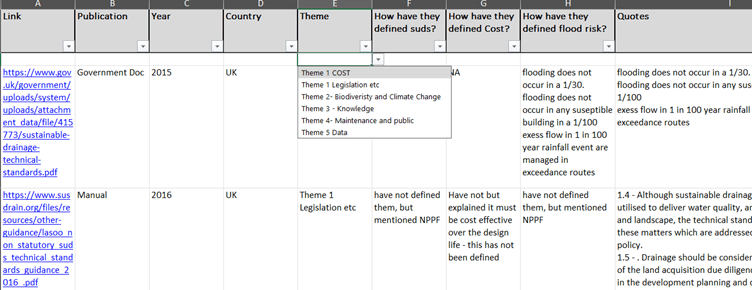
Figure 5 – Sample of Populated Excel Spreadsheet
Figure 6 – Sample of all fields within the Excel Literature Review Matrix
Appendix F
Appendix F – The Number of Experts Who Contributed to Each Theme
Table 7 – The Number of Experts Who Contributed to Each Theme
| Themes | n of participants contributing (N=6) | n of participants contributing To Themes (N=6) | |
| Policy and legislation | Theme 1 | 6 | 6 |
| cost and economic benefit of suds | 6 | ||
| CIRIA/SUDs Manual | 5 | ||
| Councils and Local authority | 5 | ||
| Risk aversion | 6 | ||
| Developers | 5 | ||
| Challenges and barriers with suds | 3 | ||
| BNG | Theme 2 | 4 | 6 |
| SuDS components | 4 | ||
| Climate change | 4 | ||
| Sustainability | 3 | ||
| Wildlife/biodiversity | 4 | ||
| 100-year storm events | 4 | ||
| Future-proofing | 4 | ||
| Flooding | 5 | ||
| Drought | 4 | ||
| Knowledge/skill base/Training | Theme 3 | 4 | 4 |
| Language/Terminology | 3 | ||
| Positives | 4 | ||
| Process and Correct Methods | 4 | ||
| Precedents | 4 | ||
| Recommendations | 3 | ||
| Maintenance | Theme 4 | 5 | 5 |
| Community engagement | 4 | ||
| Public perception | 4 | ||
| Retrofitting | 4 | ||
| Data analysis | Theme 5 | 4 | 4 |
| Flood risk | 4 | ||
| Water pollution | 4 | ||
| Soil quality Samples | 4 | ||
| Urban creep | 3 | ||
| Infiltration | 4 | ||
| Landscape design | 3 | ||
| Sacrificial areas | 4 |
Appendix G
Appendix G – Inclusion and Exclusion Criteria
Table 8 – Inclusion and Exclusion Criteria
| Criteria | Inclusion | Exclusion |
| Topic/Title | Maintenance issues in SuDS | Flooding AND pollution |
| Flooding AND housing developments | Emotional Impacts of Flooding | |
| Obstacles OR barriers in SuDS development | Public health | |
| Planning AND SUDS | Retrofit | |
| Benefits of SuDS Green Blue Infrastructure | Rural areas | |
| Urban areas | Flood risk | |
| Research | Primary | Secondary |
| Methodology | Qualitative | Literature Reviews? |
| Quantitative | ||
| Quantitative | ||
| Date | Within the last five years | Older than five years |
| (With exceptions) | ||
| Literature Type | Published Journal Articles | Blogs |
| Official Guidance Manuals | Newspapers | |
| Government Documents | Reports | |
| Undergraduate and postgraduate dissertations | ||
| Online Articles | ||
| Location | UK | Rest of the world |
| Ireland | ||
| Language | English | Non-English |
Appendix H
Appendix H – Coded Interview Finding Summary
Coded Interview Finding Summary
P1 P2 P3 P4 P5 P6
Maintenance:
“We [UK] don’t maintain our landscapes well enough in this country; there isn’t the funding, there isn’t the knowledge. And particularly when it comes to kind of new build developments.”
“You need to talk to who is going to be adopting the areas (the council normally) Early in the design process [to ensure there is no wastes time and effort or something is built and then made redundant over time]”
so technically designs should cope with bigger storms than they are designed for. (IF MAINTAINED)
management and adoption issues
The cheapest way is for Dvplr to set up a management company for 10 yrs (until the end of the warrantee) and let the curtilage deal with itself. This max profit and min risk. Nut its cheeky as passes risk to LA and LA havent authority or funding and Urban creep with happen. This creats a defunct system
Suds have to function
management companies and they charge residents /homeowners for the management of the GI
they haven’t got any money for maintenance.
maintenance that there is no Accounting for maintenance.
First you need to identify a revenue budget to maintain your suds in perpetuity – but can’t use the phrasing ‘perpetuity’ because the funding programs are let every three years so budgets released every five years so they cannot say it will be continued after that.
And we must maintain existing SuDS so that they remain beautiful and muti-functional, so that people aspire to deliver them.
If someone wants to maintain it, they can maintain it Suitably
Urban creep
How can you stop drives being changed in curtilage to tarmac? Could this be put in deeds – but who would enforce this?
Generally, 10% urban creep – CIRIA manual
Green roof: The other thing is the maintenance that comes with that. because it’s up to individual dwelling owners to maintain it does tend to work a bit better on Apartment blocks and things like that, where you’ll have a maintenance company and the monthly charge. so green roofs
Highway suds- comes a bit down to the highway Authority and whether they’re willing to accept them- maintenance liability to make sure they still look nice
Knowledge/perspectives
[Lack of maintenance] This is partly due to funding, Staffing and Knowledge base. But also, local authorities are just so risk averse, with how they spend their money.
Green roofs – flat – people have to change their perception in UK.
We have to change our thinking fast across all industries inc. legislation & funding to be able to mitigate effectively.
General public don’t mind their field flooding, it shows the infrastructure works and safes their property.
Skills gap in industry construction/building with water
Misunderstanding of how the management train works (rain doesn’t come out all at once.)
Suds is an opportunity, not an obstacle.
People just don’t understand how they and the rain work
A further constraint is design skills and training
Levels nto done right resulting in failing suds – waste of money
Developers/designers and engineers don’t understand some suds and the calculations for them. They request the wrong study which wastes time and resources
Just thinking about the environment now and are aware that saying “Yes, there is climate change” but not thinking about the actual consequences of that change that will happen, the sea level, the rain, the drought. It seems like they think this is what it is Now, these are the regulations we have to build not genuinely future proofing
there’s going to be massive climate migration
infrastructure is perceived to be more expensive to deliver (although some say it is cheaper).
Think of the whole, a one in 100-year event, I a lot of people haven’t even seen how much rainfall that is. consider this and how low we’re restricting discharge too
A lot of people go my “house is flooding because of that development down the road and people are building on floodplains and it’s because of that development that that River’s flooding”. but if you really dive into the depths of all the Hoops that we have to jump through now, it’s really not the case.
SUDS:
They should be focusing of all 4 pillars- generally the focus is just attenuation not the rest
Having visible drainage allows for quick maintenance and repair
Suds and drainage should be seen as one. Then, they are classed/seen as critical infrastructure – when using the term infrastructure, it creates a critical need.
Design to green field run off. Looking at this site only but making sure no negative impacts downstream.
If you have large areas of soft landscaping, you can incorporate much more volume cheaply.
You have to build them in from the start (not retrofit them after) to get the best out of them, efficiency and cost wise
Plant for the long term future generations
The simple way to deal with it is with large attenuation ponds.
“When you put suds in, the neighbourhood sounds different. It smells different. It looks different. It’s bringing nature back to streets, where it used to be, and it, and, and it’s engineered. So, it’s accessible maintainable and it’s got longevity. So, that’s why they are nicer places to live and work”
So many suds are now failing because they are not looked after, its only a matter of time before they stop all together. They’re put in with little integrated thought.
Suds don’t have to do all 4 pillars, they just have to work
Terminology
This is an issue – what is green infrastructure – we use nature-based because a plastic tank underground is classed as sustainable drainage.
Is a better way: living sustainable drainage systems. Because characteristics of living sustainable drainage systems lend themselves to delivering wider benefits,
They just tend to be siloed and they have their own language, and they have their Concepts and their training.
Urban greening – rubbish – whats the point
Developers
They like to keep to what they are comfortable with
industry works within legislation, policy and regulation. And how well they work. iIs influenced by how well promoted those policies and regulatory systems and they will respond. They’re generally good guys as individuals
have their set drawings they don’t want to do anything besides that
Housing developers just want to continue to do what they have always done because their teams know how to do it,
Design
Often, a lot of schemes are paved; this ensures there are low maintenance costs and more chance of adoption.
Planting choice is important, grass isn’t the best option
The more progressive developers and designers are starting to think differently.
Flow control should be at the beginning (e.g. roof garden) of the management train, not at the end (pond). So there are lots of smaller interventions along the way so come the end theres not much water left.
Lazy standard designs – cheap and easy to produce, but not fit for purpose now with schedule 3 and planning for future.
Designs are engineered out by the time of construction
We need to maximise the sponge effect capabilities of the land, inc green roofs and walls,
living sustainable drainage systems can be attractive and you don’t need to hide them – they are assets
drainage hierarchy that we have to follow
we do have to restrict to such a low rate, sometimes you have to use a balance of the two (crates and green suds)
Incorporate them into our design from the onset, to make sure that we’re not doing things like Causing over capacity to the system Downstream.
Butts etc So when we design our drainage systems like we might, we might propose them, but we don’t Incorporate them into the design and calculations. we have to consider that they’re full anyway. but they, they do get proposed.
Legislation/ local authorities etc
The environmental agency can put up lots of blocks and barriers, especially if it is not something they are used to.
UK keeps making it more and more complicated. USA – portland – its simple and easy to understand and is respected.
Schedule 3 – made extra hoops because of the green infrastructure design, but if it was a simple tank, there would have been no integration.
London is leading the way
Missed opportunity with schedule 3. Government have the wrong attitude, they want to build first and deal with that later.
Incomplete process changes=process breakdowns
Putting deed regulations hasn’t stopped urban creep (in Wales you cannot hard landscape front drives – but it’s this is accelerating because of EV chargers)
They can be quite complex to mandate for. I think it’s that relationship, it’s about the relative benefits and design priority
Requires partnership working and you need clear governance and memorandum of agreement around it who’s going to do what
So local authorities are short of money and they’re not in a position to take on large amounts of new green infrastructure
Some suds arent included in surface water management by some councils
It is plausible to put something in the deeds and this should work if the owners understand it
At the moment there is a legal blockage, So the water companies are not allowed to provide non-potable water to residential properties, or even back to any property. So, they’re not allowed to do it (rainwater capture reuse) – OFWAT are trying to get this removed
And local authority teams are underfunded and spread too thin, so there is too little time available for learning and trying new things.
We must regulate to make SuDS and GI common practice.
There are quite a few hoops, we have to jump through.
Permeable paving – can’t be used on adoptable streets for most instances – some adopt them and then cover them in tarmac
Education:
“There’s a significant lack of confidence from Landscape Architects” – this is partly because of how policy is set up. If the drainage information (micro drainage) is coming from a LA rather than a drainage engineer, it will be interrogated.
You need a 10-year training program for climate crisis. We don’t have enough landscape architects, Engineers, modellers technicians. Theyre all retiring. We should’ve started this 5 years ago.
We need more education
There is a lot going on to determine sort of if we are doing the right thing and if it’s not quite the right thing what to do to change it in the future and to make the try to claw back where he might have gone wrong.
LA remove or don’t adopt perm paving Because they’re just not in a position to adopt them and they don’t necessarily know enough about them; how they’re going to work, and how they’re going to Look in however many years’ time.
1:100/Data/flood
Data is outdated, UK is behind the rest of the world when it comes to what rainfall event they design too, even with the +40% climate change add on.
You can absolutely hold 1:100 safely and hidden the infrastructure without any damage.
Green Roof à Rain gardens à permeable paving à Swales à green space/attenuation areas. Including highway raingardens its highly feasible.
We are designing to 1:100 capacity (some milk risk zone flooding) but it is being watered down by adoption issues
Micro drainage
When calculating we use VERY conservative date because we have to assume that buts etc are full, the take base level of infiltration and evapotranspiration. And the lead local flood authority doesn’t take into account the soil voids – so technically designs should cope with bigger storms than they are designed for. (IF MAINTAINED)
Weather patterns are erratic – same volume across the year, but more intense. We have to adapt designs to cater for this.
It is easy to design to this if design cleverly,
Get your tests in early to then be able to cost (lifetime inc maintenance) effectively and suds design integral then
It is about intensity and volume
MUST TEST TEST TEST at the beginning.
Skalco live modals how water flows over ground. Microdrainage and environment agency flood data
The frustrating thing is it’s designed so that your development doesn’t exacerbate Flood risk. But theoretically, you could actually design it so that it reduced flood risk. You could actually go beyond the planning requirements
But a one in 100 events are more than likely going to happen, far more frequently in the future.
It’s possible to hold 100 on site safetly but the soil must be right
So, for the lifetime of a development which is generally, 100 years, We’re looking at the highest year it goes, which is 2070. Is this enough?
HR Wallingford. UK studs green pool runoff estimation – hydrological region, soil types because different types of soil have different infiltration factors
Got to do efficient testing to check the soil infiltration and topography
Houses are high risk and shouldn’t be located in that zone, but if the site flood you still have to demonstrate access into and off remains
We design for 40% climate change for the future
We are allowed to have a little bit of flooding coming out during 100 Year, but it all has to stay on site.
In attenuation areas – risk associated with the basin filling with water – no play stuff & Sports/play pitches have certain design standards
Cost
“We have managed to save the client a significant amount of money by installing blue green roofs so they’re green roofs that also stores that have certain like attenuation of water storage on top of them and they have flow controllers, connected. So, they release their water controlled flow back into the drainage Network. I think the client did the costs and it was cheaper to put blue green roofs on the majority of the blocks as opposed to building and attenuation tank of a similar volume. Actually, then you free up your landscape space on the ground to be much more flexible. biodiversity benefit”
Developers will always push a management company because they don’t want to pay for cumulative sums
GI/SUDS will help sell your property for more money
You can maximise you profits buy designing in the right way not just standard designs.
You will have an expensive design if you don’t consider them from the start
Work out the cumulitive sums early!
green infrastructure is very cost-effective by comparison with grey-engineered Solutions, and I know there’s evidence for that, and it’s well-researched and documented.
That [anything for wildlife] won’t get included in their designs; they just won’t do it because it’s an additional cost.
We can make it pretty. And by planting it up, making it look nice. So, it would increase the value of the remaining houses.
Drought
Special materials like rockwool and permavoid have 90 void space, wicking effects, to help retain water for dryer months.
Have to look at geology/soil/plants to best mitigate this
This is where we really need rainwater harvesting in order to keep you know, to address
Soils arent right in suds so water just dissapiers
Suds need to be moist and permeable , and could also be used with a solar pump for a drinking source for wildlife
Some councils do consider drought but its not common
Recommendation/ what’s missing
when you’re doing suds you need the balance between engineering and Landscape Architects.
Rainwater harvesting and blue-green roofs are a massive, missed opportunity in all. However, there is scepticism from insurance companies and NHBC
Theres no regulation post development
Make designing suds more accessible (avoiding some of the red tape and intense calculation scrutiny)
Change attitude to being ok with having water on our properties (safely)
Pay correctly for the land according to topography and geology
Suds need to be coined as essential infrastructure, not just beneficial.
Integrated Water Management.
All disciplines involved early on and all have similar weight within the design process or nothing will change.
People need to look at soils quality- bester soil better infiltration etc
The developer needs to take responsibility for more long term not just initial build, not just plonk in a curtilage or employ a maintenance co. (wha if they go bust)
Pay less for the land, design better and charge more for the house
We must encourage better design
Sustainable(long lasting) careers in the public sector with training and progression. E.g. technical officers like LA and engineer technicians
MUST ENGAGE THE COMMUNITY – if they understand they will respect and protect it
Sustainable drainage features in Highway cartilage. It, I understand it’s that issue of The responsibilities for management and maintenance.
Rainwater capture and reuse – there are public healt issues related to this, but it can be mitigated- eminently feasible and very desirable – we should do it everywhere
Smart telemetry systems to montoir components and maintenace
DO NOT BUILD ON FLOOD PLAINS
People need to look at soils qualtity- bester soil better infiltration etc
40 for climate change uplift
Sacrifical flood zones
Build to property flood resilience – higher sockets etc – preempt a property will flood – build to worst case scenario
install non-return valves in your sewer so that the sewage doesn’t come up back up your toilet
Community rainwater capture and reuse
Suds need to be in planning working with environment agency. Better legislation and better enforcement of that legislation
Every semi or terrace should have a downpipe to use their own rainwater
A green roof is a fantastic idea, but it has to be on a flat roof
What’s good
Welsh are now seen as experts and developers/desighers LA etc are going to them for advice.
Rain gardens on adoptive highways
Pre-emptive storm water capture (but it has its own issues
Planning and local authorities do have some authority to stop sites without effective suds
A lot of guidance tends to get updated every couple of years – only 8 years ago there was free discharge – so much has changed
Barriers:
Lack of understanding. cost. Adaptability/adopting, insurability.
Green infrastructure data is fluid because of the plants – its hard to answer engineering calc needs.
Too many hurdles for the developer.
The master planning element often “fixes” the design before SuDs are properly considered.
Land price
Developers ignore the legislation- even with schedule 3
Westminster
No integrated working in local authorities and between professional disciplines
The maintenance, the ongoing management is a constraint.
There’s still a lack of confidence in relying on green infrastructure
No community consultations
Complete aversion to relying on householders
The blocker is that there are no planning requirements. So there’s no imperative so that’s why nobody does it. The house Builders won’t do anything unless you’ve got their arm up their back. And homeowners, don’t know that there are things.
We just don’t care in this country, because water has been too freely available
Planning authorities are the issue. You’ve got this conflict with the planning authorities desperately need people to build houses because they’ve got a government Target and they need the council tax income so the LA allows to build on a flood plain or without suds.
Planning application need to think of surrounding areas – so not in isolation water integrated Water Management’s There needs to be more cohesion
Each County has their own design guidance and for surface water drainage
Soil, infiltration and topography factors will potentially rule out discharging to infiltration
Cross third-party land to get to river way/drain, you’re going to run into issues
Trying to determine who owns/maintain what w/r/t drainage
Rainwater capture – Such systems would fill during times of wet weather (e.g. over the winter) when water supply is not an issue and the water reserves would not be used. This however means there would be little to no output from the system and water would essentially continue to fill the system. As a result, when completing calculations to size such a system it would need to be assumed that it is full/close to capacity at the time the next rainfall event occurs to ensure the worst-case scenario is considered, resulting in additional attenuation being provided in addition to the re-use system to ensure the drainage system would have sufficient capacity. Such additional storage would be expensive to provide and take up space on development which would then make it unfeasible from a cost perspective.
BNG
Some stand-alone suds do not work for bng as they are not stable and don’t link with rest of environment
Appendix I
Appendix I – Four Pillars of Suds
Four Pillars of Suds
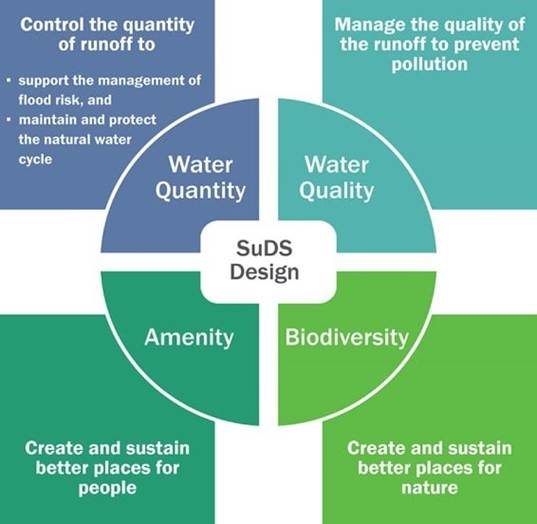
Figure 7 – Four Pillars of SuDS
(Devon Council, no date)
Appendix J
Appendix J – A List of SuDS Components and Benefits
Table 9 – A List of SuDS Components and Benefits
| Manage local flood risk | Manage water quality | Enhance biodiversity | Provides amenity/ community opportunities | Provides educational opportunities | Multifunctional | Adaptable | |
| Source control e.g. green roofs, rainwater harvesting, permeable paving, other permeable surfaces | YES | YES | YES | YES | YES | YES | NO |
| Swales, rills and conveyance channels | NO | YES | YES | YES | YES | NO | NO |
| Filtration e.g. Filtration Strips | YES | YES | YES | YES | YES | YES | NO |
| Infiltration e.g. Soakaways, infiltration trenches, infiltration basins, rain gardens, | YES | YES | YES | YES | YES | YES | YES |
| Retention and detention ponds/basins and geocellular drainage | YES | YES | YES | YES | YES | YES | NO |
| Wetlands | YES | YES | YES | YES | YES | YES | YES |
| Inlets, outlets and control structures | YES | NO | YES | NO | YES | NO | NO |
(Susdrain, no date)
Appendix K
Appendix K – List of Professionals
List of Professionals
This list is not exhaustive.
Architect
Bricklayer
Building Control Officer
Building services engineer
Building surveyor
Buyer (procurement manager or purchasing manager)
Carpenter
Civil engineer
Construction labourers
Construction manager
Construction site supervisor
Demolition operative
Drainage Engineers
Drone pilot
Electrical Engineer
Estimator
Facilities manager
Formwork
Gas mains layer
Grounds person
Heating and ventilation engineer
Heritage officer
Land surveyor
Landscape Architect
Landscaper
Planning and development surveyor
Project Manager
Quantity surveyor
Road worker
Roofer
Scaffolder
Steel erector
Steeplejack
Stone Mason
Structural engineer
Surveyor
Town planner
(UK Government, no date)
Appendix L
Appendix L – An Example Boolean Research
An Example of the Researchers’ Boolean Research

Figure 8 – Example of Boolean Research Method
Appendix M
Appendix M – Cambridge Design and Adoption Guide Flow Chart Table
Cambridge Design and Adoption Guide Flow Chart
(Wilson et al., 2009)
Table 10 – Cambridge Design and Adoption Guide Table
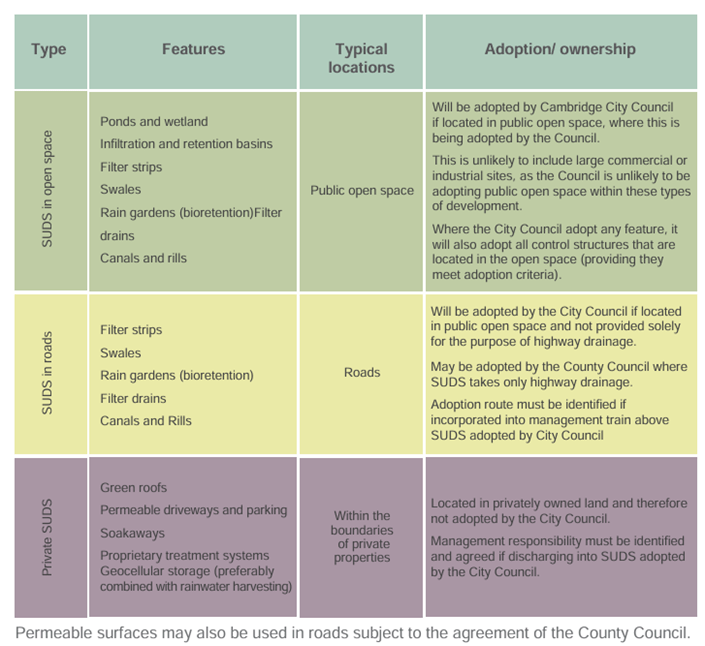
(Wilson et al., 2009)
Appendix N
Appendix N – Flood Risk Management Funding Responsibility Table
Flood Risk Management Funding Responsibility Table
Table 11 – Flood Risk Management Funding Responsibility
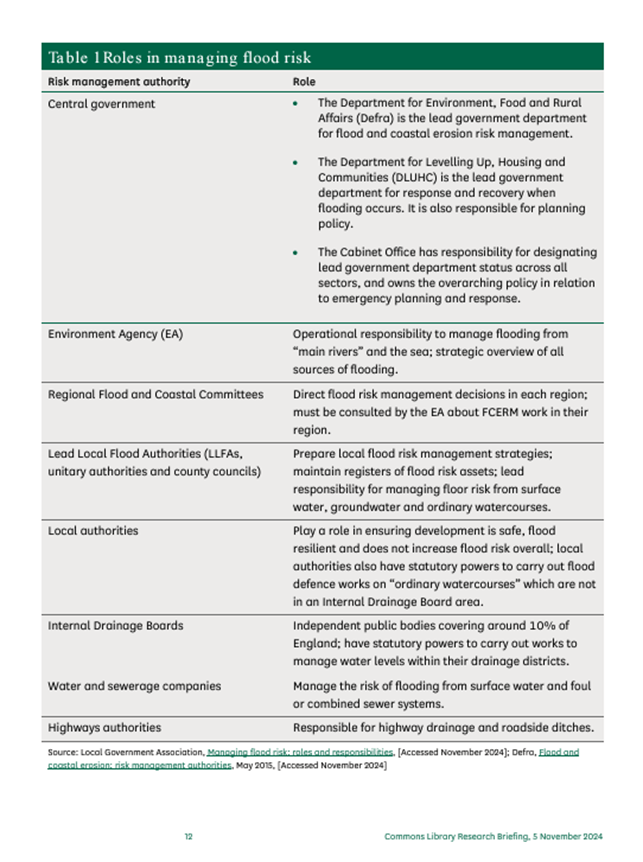
(Burnett et al., 2024)
Appendix O
Appendix O – Example Table of Maintenance Recommendations
Table 12 – Example Table of Maintenance Recommendations
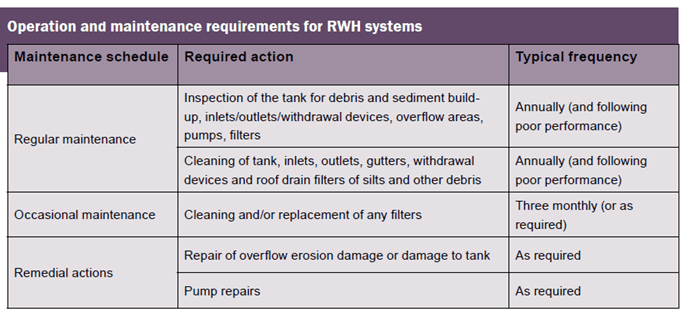
(Woods Ballard et al., 2015)
Appendix P
Appendix P – Themes That Answered the Research Objective
Appendix Q
Appendix Q – Adoption Restriction Table
Table 14 – Adoption Restriction
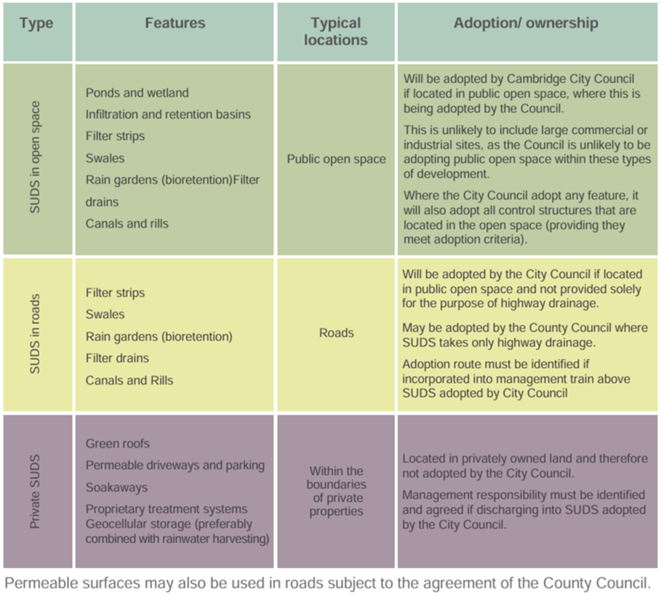
(Wilson et al., 2009)
 AJ Landscape Architecture
Leave a comment