(Peter Drucker)
My mission if I choose to accept it was to design a stolling garden, and grand lawn.
Linking this with my concept of connection, I created an intertwining, winding path. This allowed for different routes which could increase or decrese the time taken through the areas depending on the visitors needs and wants.
The planting areas are mounded, with the strategic placement of larger trees and shrubs at key points. These act to either obscure or reveal views at each node or junction, creating moments of intrigue and pause along the way.
The entry point at the top of the garden is framed by two large weeping birch trees. This motif is echoed at the garden’s lower end, where two cherry trees mirror the birches, marking a transition and signaling the change in space and mood between these two points.
I wanted the garden to feel secluded and immersive, but not so dense that it felt like being lost in a forest. To achieve this, I selected plants that are generally non-toxic and rich in sensory qualities. For example, the gentle sway and delicate leaves of the weeping Birch, its striking white bark, and the vibrant floral displays and fragrances of Cherry, Amelanchier, and Cornus bring seasonal beauty and a soothing atmosphere.
I also considered year-round interest. Autumn colour is provided by Acers, while evergreens ensure the garden maintains structure and foliage even through the winter months. The planting is designed to be as much about feeling as it is about aesthetics, a place that supports rest, curiosity, and connection at every step. I could maybe have included seating which would have encoraged people to sit and experience it for longer.
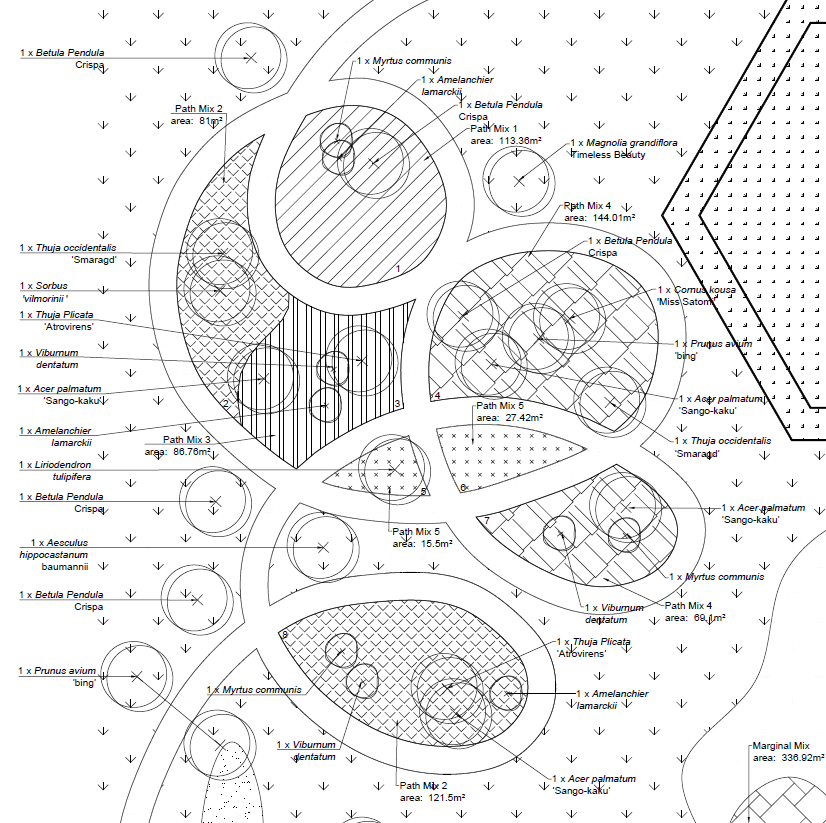
From the terrace located at the top left of the image, I wanted to ensure the space was visually and acoustically screened from the road situated at the bottom right, just outside the site boundary. To achieve this, I proposed a row of weeping Birch trees across the path. Their cascading foliage not only provides visual screening but also helps to muffle noise from the road, creating a more tranquil environment within.
Further down the garden, I introduced an additional cluster of trees and shrubs, including several evergreens. These ensure that the screening effect is maintained throughout the winter months, offering year-round privacy and a sense of enclosure.
Furthermore, the row of Liquidambar trees will provide a striking visual display in autumn, with their vibrant red and orange foliage adding a dramatic seasonal highlight to the garden.
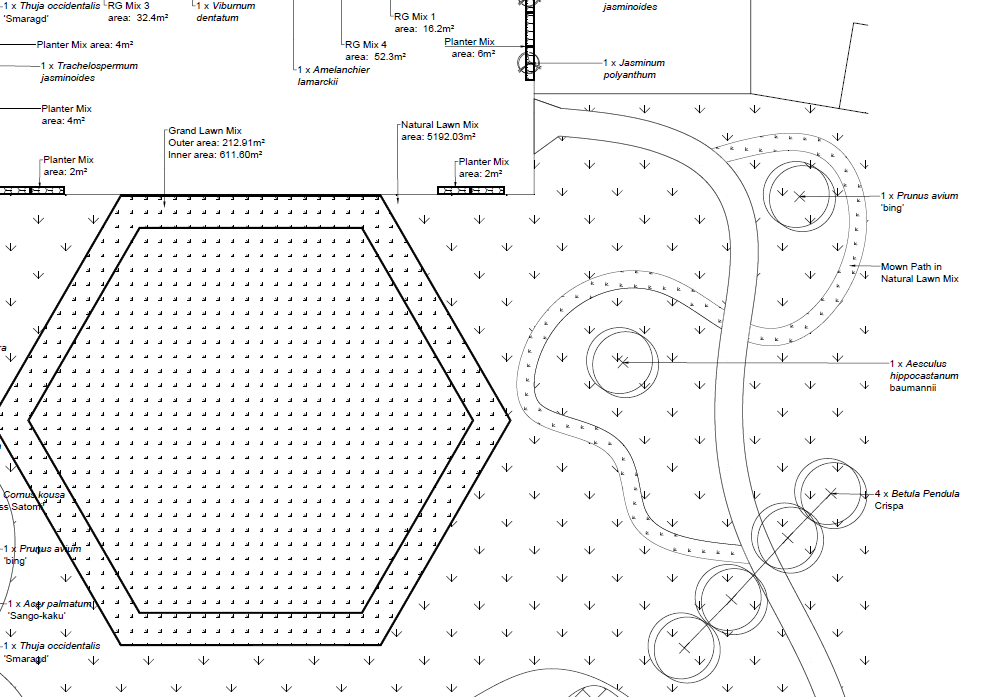
At the heart of the garden lies the grand lawn, designed in the shape of a hexagon- the strongest geometric form. This was a deliberate choice, symbolising the inner strength we all possess, regardless of the chaos or challenges that may surround us.
The lawn is enclosed with block paving edging, serving a dual purpose. Practically, it makes mowing easier and cleaner. Symbolically, it represents the barriers we build around ourselves, some of which need to be broken or softened to allow for healing and personal growth.
The rest of the grassed areas are much looser herbal mix, contrasting with the rigidity of traditional lawns. This choice reflects a freer, more natural way of life, encouraging visitors to embrace personal freedom and step away from strict regimentation.
Key feature trees in this design include Salix babylonica (weeping willow) and Aesculus ( this one is a pink horse chestnut). Each offers unique qualities whether it’s the graceful, flowing form of the willow or the bold structure and seasonal blooms of the chestnut. Both trees are designed to draw people in, creating natural gathering points where visitors can sit beneath their canopies, pause, and admire their beauty throughout the year.
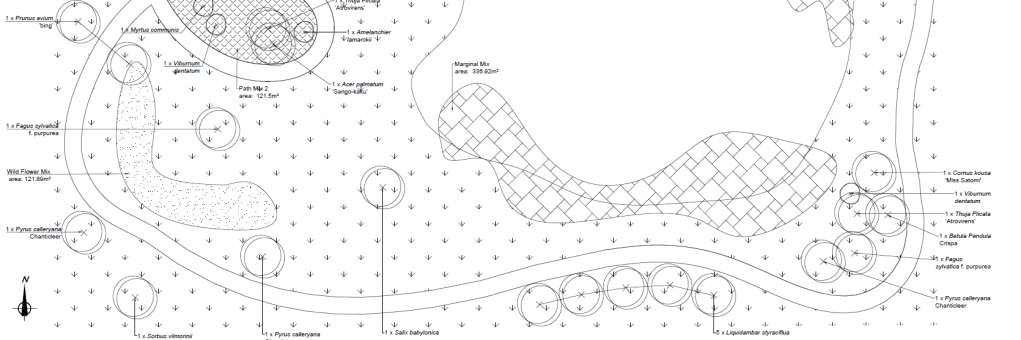
I’m happy with what I proposed here. While I recognise I could have been a little more adventurous with the planting palette, the repetition of certain species was intentional. I wanted to create a sense of cohesion and connection between different areas of the garden echoing the core theme of the design.
Throughout the process, I tried to keet the end users in mind, considering how they would move through and experience the space. My aim was to create a garden that not only looks beautiful but also feels intuitive, calming, and inclusive for a wide range of visitors and their theraputic needs.
Hopefully, mission completed.
 AJ Landscape Architecture
Leave a comment