My goal with the planting mixes was to create texture, seasonal interest, and strong visual form. I aimed for floral displays that would evolve throughout the year, with layers of shape and colour that shift from season to season. To maintain year-round interest, I included evergreen shrubs as well as plants with notable winter features, Cornus for its vibrant stems and Hydrangeas with their dramatic seed heads.
I also felt I had to make sure the planting numbers matched what I originally proposed in my mix designs. Accuracy was important, not just for visual consistency, but to ensure the planting plans were realistic and buildable.
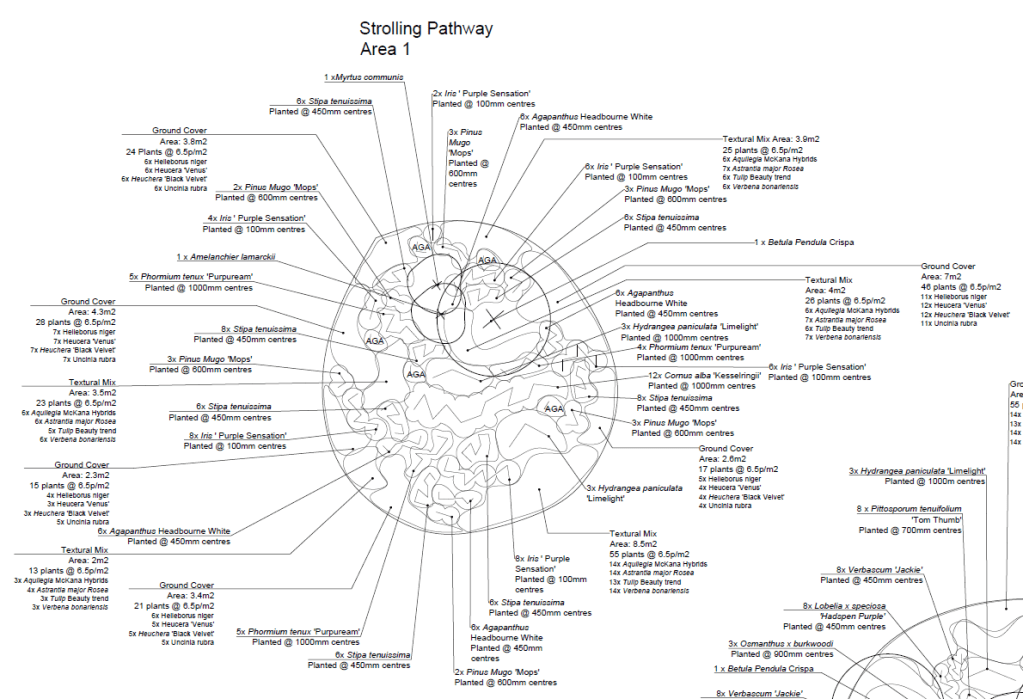
The planting is intended to be fairly dense, with herbaceous species planted at approximately six per square metre, and shrubs at around three per square metre. In areas with a higher density of trees and specimen shrubs, I now realise I should have double-checked that all species were suitable for shaded conditions. It’s something I’ll be more conscious of in future designs.
Where possible, I selected non-toxic species to ensure safety for all visitors. I also tried to ensure that the colours of leaves, flowers, and stems would complement one another through the seasons, creating harmony or juxtaposition in each area.
I paid attention to the soil pH and structure when choosing the planting palette, trying to ensure species suited the conditions for their success.
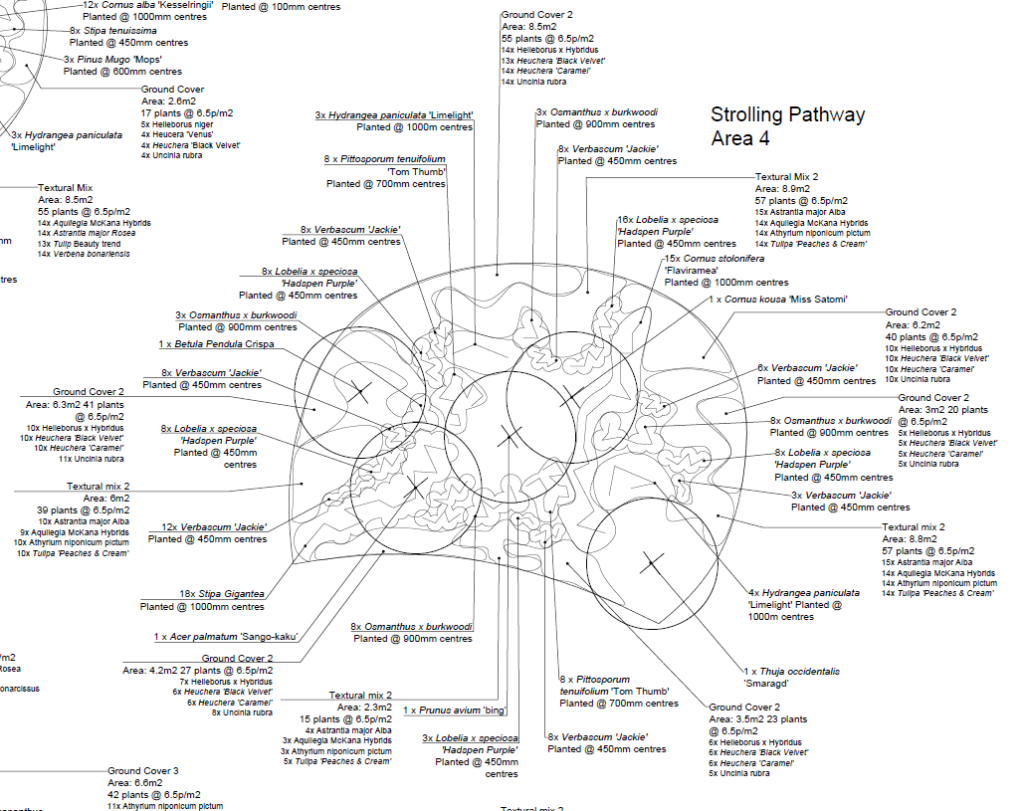
Overall, I’m reasonably happy with the results. I’d love to recreate a small border of this mix in my own garden one day, to see if it really works the way I envisioned it in my mind.
I do wish we had covered more horticulture in our university sessions. It’s something I’ve come to really enjoy, and I believe it’s vital for any aspiring landscape architect to appreciate the value that effective horticulture brings to a space. It’s not just about aesthetics, it’s about atmosphere, sustainability, and the long-term success of a design.
 AJ Landscape Architecture
Leave a comment