Model making is something I genuinely enjoy, and I have often wished it were a required part of every assignment, whether it’s a simple cardboard mock-up or a digital version in SketchUp. For me, working in three dimensions makes a huge difference to how I think through and develop a design.
I’ve come to realise that my work tends to improve once I’ve built a 3D base. It’s a way of thinking that dates back to my A Level Art & Design days, and I now see how valuable that hands-on, kinesthetic approach is to my creative process. I only wish I had recognised it sooner and made more use of it throughout the course.
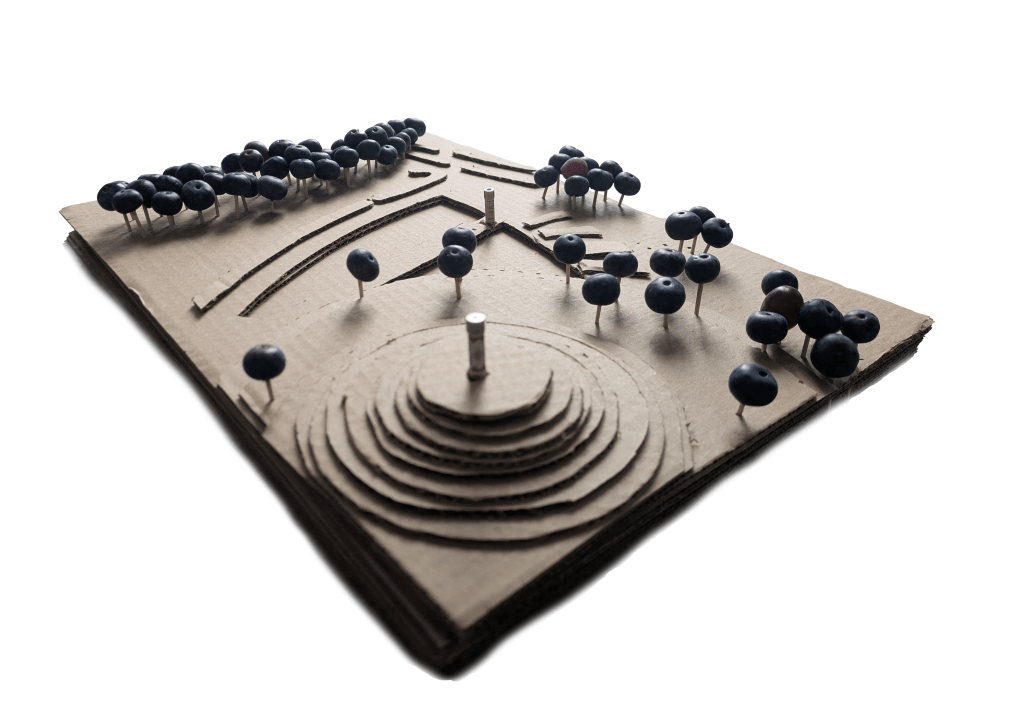
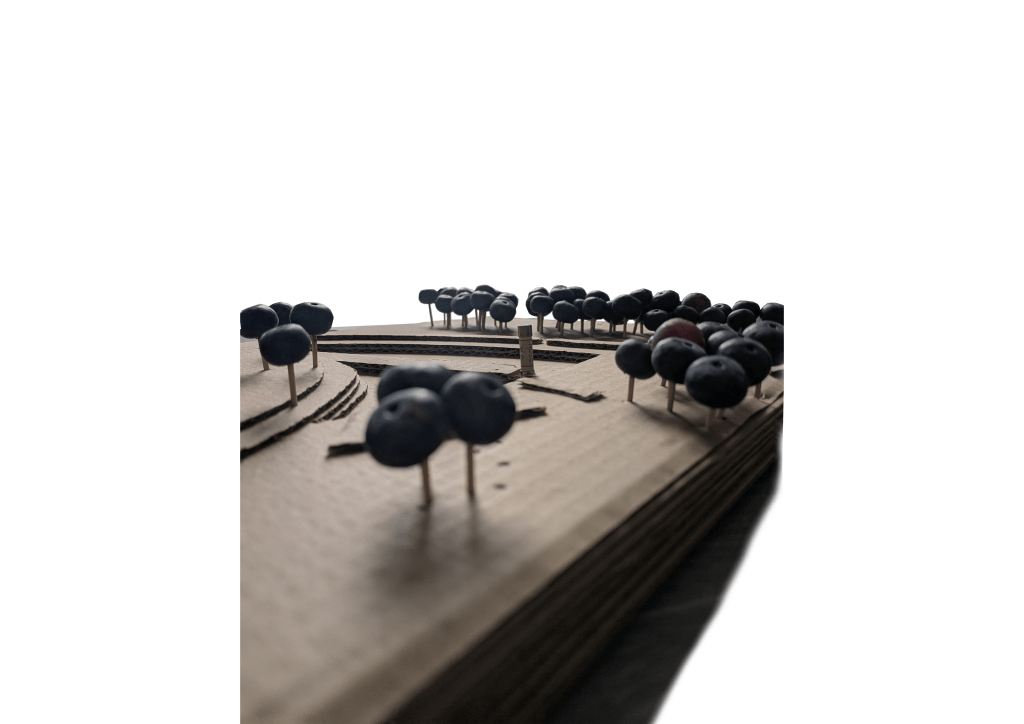
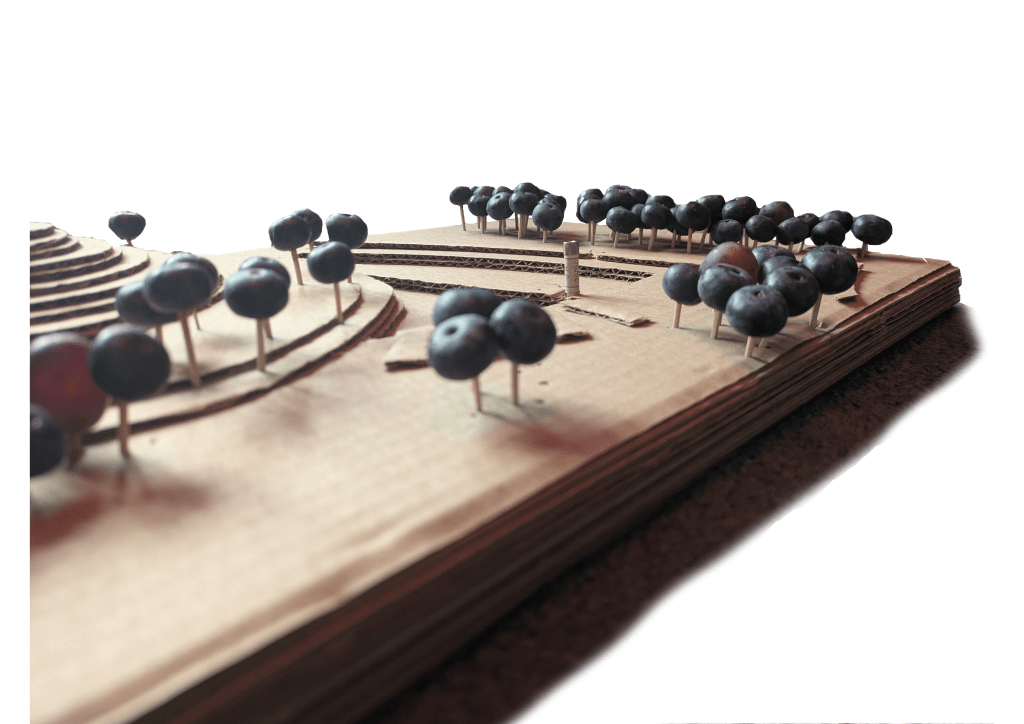
For this particular model, I used cardboard to explore the mass and void of a small section of Solgard Fields. I tend to use accessible materials like cardboard, foil, and food, they’re easy to source, quick to work with, and sustainable in terms of reusability and recycling. The key, though, is remembering to take high-quality photographs before anything disappears!
This design includes key sightlines that guide an experience of moving through the landscape, which I’ve tried to show with the gaps between the blueberry trees. As a qualified electrician, I couldn’t resist incorporating some old fuses I had lying around and they turned out to be surprisingly effective in representing the obelisks.
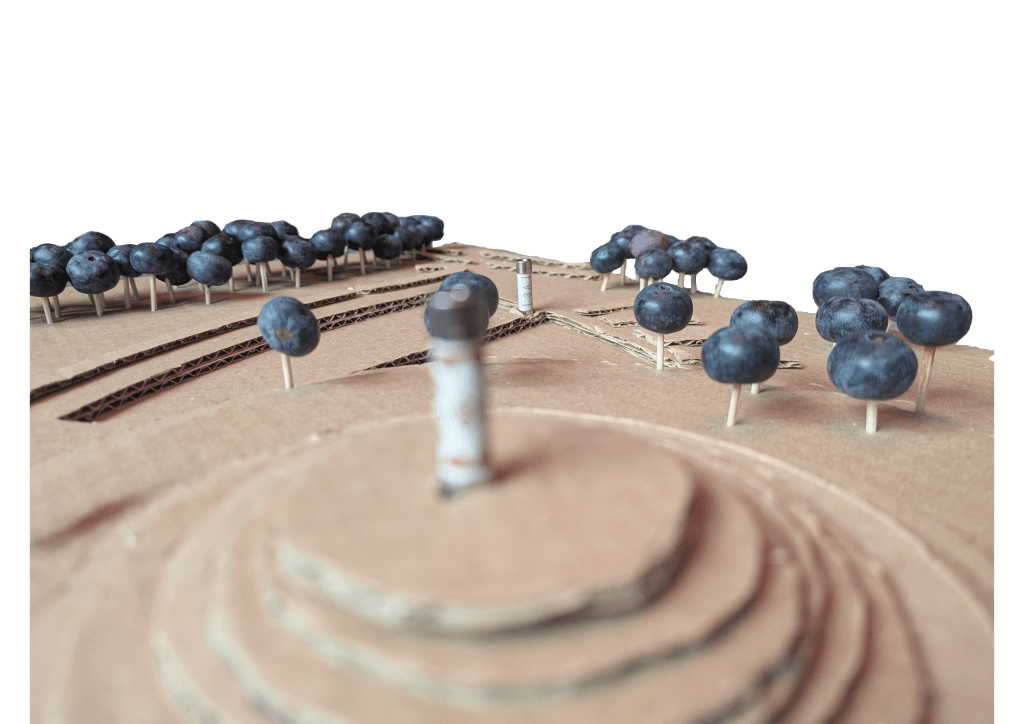
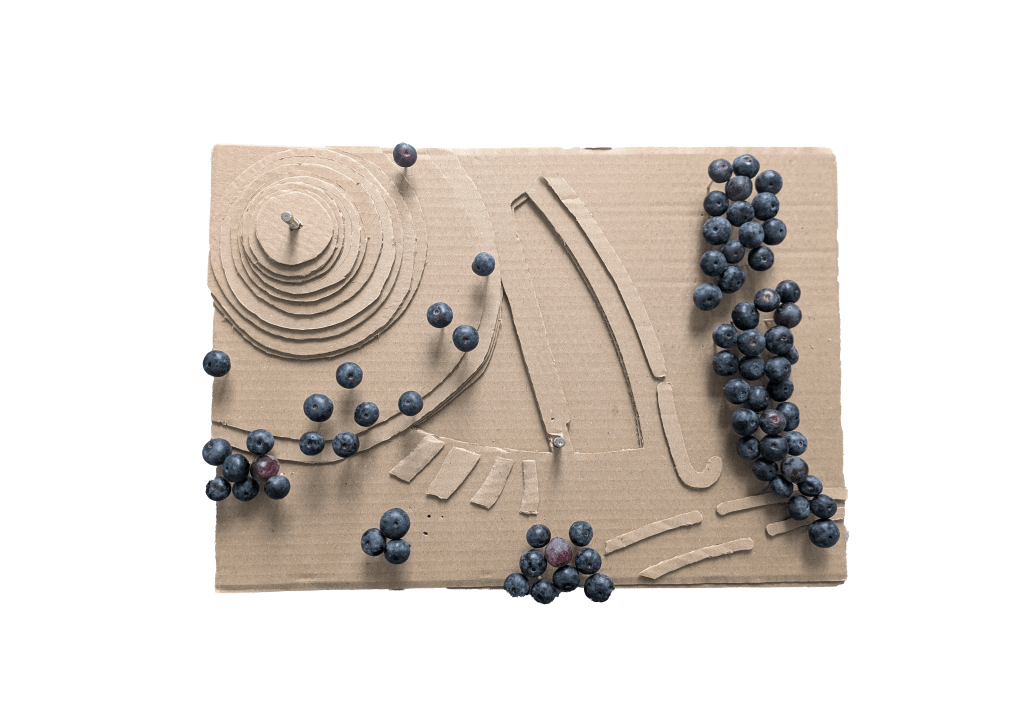
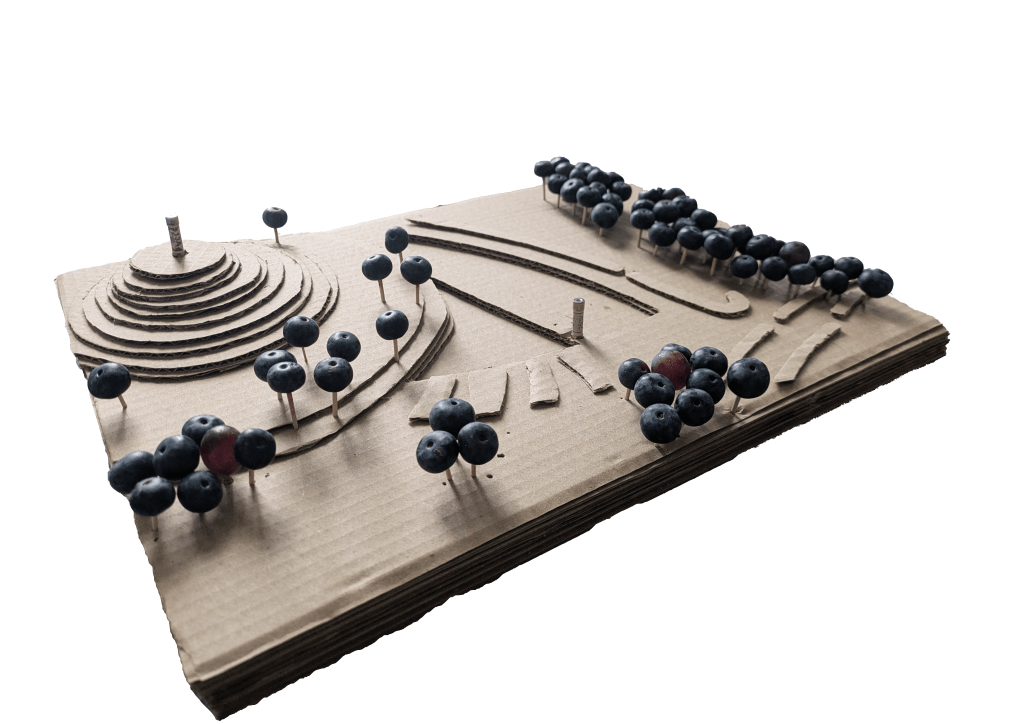
The model is built to a 1:500 plan scale, though the physical elements aren’t strictly scaled in 3D. Still, the overall form, especially the mounding, communicates the intended spatial experience quite well. Unfortunately, I wasn’t able to access the model-making studio or laser cutter, so the edges are a bit rough. That said, I think the simplicity gives the model a certain charm, and the use of unconventional materials adds a layer of ingenuity and individuality that I’m proud of.
 AJ Landscape Architecture
Leave a comment