Landforms—natural shapes and elevations such as hills, valleys, slopes, and plains—offer landscape architects a powerful medium to work with, allowing them to enhance design, manage environmental impact, and even influence how people interact with a space.
By working with natural or created landforms, landscape architects can define areas within a landscape, create visual interest, and manage the flow of movement.

The American landscape architect Lawrence Halprin deeply valued the connection between natural landforms and human experience. Throughout his career, he used natural topography as a central element in his designs, crafting landscapes that invite people to interact with the land in meaningful ways.
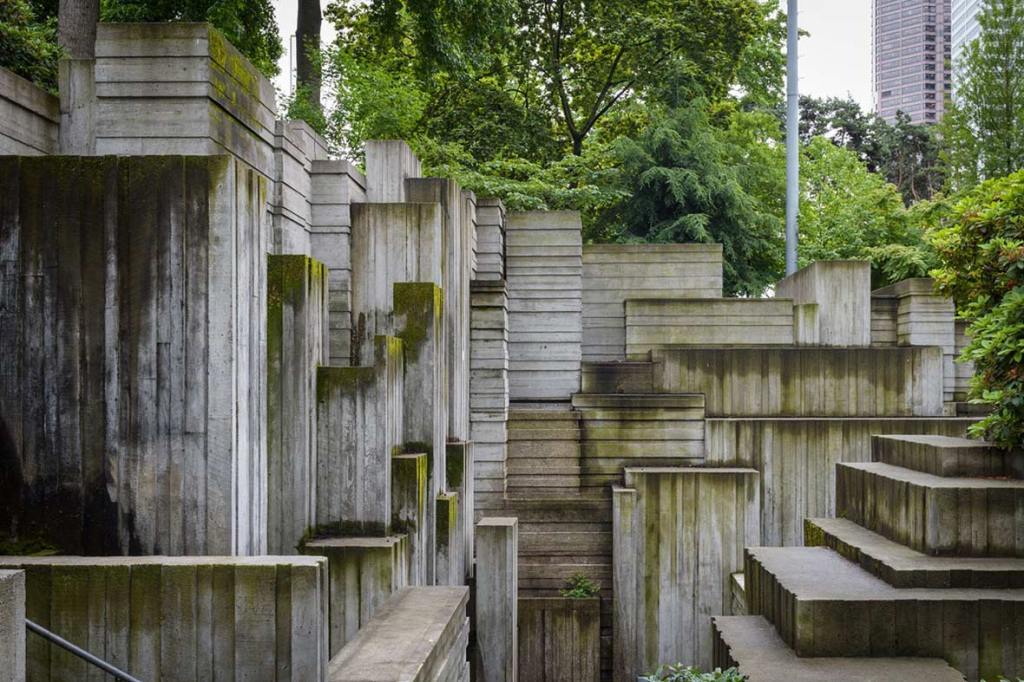
One of Halprin’s most famous projects is Freeway Park in Seattle. In this project, he used a series of terraced concrete forms that mimic natural rock formations, creating a space where people can move through and interact with the landscape in an almost canyon-like setting. These “constructed” landforms are designed to flow with the natural surroundings and feel like extensions of the earth itself, blending urban and natural elements seamlessly.

Another celebrated landscape architect known for embracing landforms in design is Martha Schwartz. Schwartz has a unique approach to landscape architecture, often using landforms and bold sculptural shapes to make strong visual and environmental statements. Her work combines artistry with ecological awareness, resulting in designs that explore both the aesthetic and functional potential of landforms.

George Hargreaves is another influential landscape architect known for his work with landforms. For example, in Crissy Field in San Francisco, Hargreaves restored natural landforms to transform the former military airstrip into a coastal park that feels both natural and welcoming. Through reshaping the terrain to support native plantings and enhance tidal flows, he revitalised the ecosystem while creating a public space that reflects the unique character of the Bay Area.

They all show how landforms can become dynamic elements that enhance both the functionality and beauty of landscapes, creating spaces where people can experience and connect with the natural land in new ways.
Their work is a testament to how thoughtful manipulation of topography can elevate landscape architecture to both an art form and an ecological intervention.
We also have to paise designers of the past who moved earth with incredible feats to create protection and security. Cynric, king of Wessex, captured the hill in 552 and it remained part of Wessex thereafter. A motte-and-bailey castle was built by 1069.


 AJ Landscape Architecture
Leave a comment